Yeast die-off in dogs is a temporary flare of itching, redness, odor, or discharge that can show up when yeast is reduced faster than your dog's body can clear the breakdown. In many cases it means the approach is working, not failing. The answer is rarely to stop. It is to slow down. If your dog seemed to improve and then got worse a few days into a protocol, that pattern is often a signal you can read and respond to, not proof that nothing works.
Here is the one line to hold onto: a dog getting worse on a yeast protocol is often a sign it is working too fast, not a sign it has failed.
Let's be real for a second. If you are reading this, you have probably tried a lot. You switched foods. Maybe you went raw. You have been back and forth to the vet. You may have already run a natural yeast protocol and watched your dog get itchier instead of better. And now you are wondering if you did something wrong.
You did not. You have most likely been missing one layer underneath, and once you can see it, everything you have already tried starts to make more sense.
This piece draws on a conversation with Julie Anne Lee, DCH, founder of Adored Beast Apothecary, from the Next Level Pet Parent Podcast. You can watch the full episode here.
What is yeast die-off in dogs?
Yeast lives on every dog. It becomes a problem only when it overgrows. The specific yeast most dogs deal with on their skin and in their ears is called Malassezia, and here is what most pet parents are never told: veterinary dermatology considers Malassezia overgrowth almost always secondary to something else. Allergies, skin barrier problems, and certain hormonal conditions change the environment on the skin, and the yeast takes advantage. That is why it keeps coming back until the deeper driver is supported.
Die-off refers to what can happen when you reduce that yeast. There is a well-documented reaction in medicine called the Jarisch-Herxheimer reaction, first described over a century ago. When large numbers of microbes are killed quickly, their breakdown releases inflammatory substances faster than the body can clear them, and you see a short-lived flare: more itch, more redness, sometimes a day of loose stool.
An honest note here, because honesty is the whole point of what we do at PAWDEGA. The Herxheimer reaction is best documented for certain bacterial infections in humans, and its exact mechanism is still not fully understood. Applying it to canine yeast is a reasonable idea used by many holistic practitioners, and it fits what they see in real dogs, but it is not settled canine science. I would rather tell you that plainly than pretend the research is more certain than it is.
Is my dog getting worse a sign it's working?
Sometimes, yes. This is the part that trips up almost everyone.
A dog with a large amount of yeast can look only mildly itchy, because a strong body keeps that yeast at bay. Then you start a protocol, the body finally gets the tools to reduce the yeast, and it goes at it fast. The result can look like a flare. Many pet parents panic at exactly this moment, stop everything, and head back for another round of medication. The cycle starts over.
The skill is learning to tell the difference between a flare that means "too fast, slow down" and a genuine sign that something else is going on. You do that by paying attention and writing things down, which I will walk you through below.
Why does my dog's yeast keep coming back no matter what I try?
Because the yeast is usually the result, not the root. If your dog yeast keeps coming back, it is worth looking at what keeps letting it overgrow.
There is also a specific group of dogs that become hypersensitive to the yeast itself. Veterinary sources describe these dogs as reacting intensely to only small numbers of organisms, with recurrences that often begin shortly after a course of medication ends. For a dog like this, clearing the current overgrowth was never going to be enough on its own. The immune overreaction and the underlying skin and gut environment have to be supported too.
Why is my natural yeast protocol not working?
When a good protocol seems to stall, it usually falls into one of a few recognizable categories. This framework is the single most useful thing I can give you, because it turns "nothing is working" into "here is which situation my dog is in."
The four common reasons a yeast protocol stalls:
- Too much yeast, dying too fast. Your dog had more yeast than anyone realized, and reducing it quickly caused a die-off flare. The approach is working. It needs to go gentler.
- A rebound after medication. Coming off suppressive drugs too quickly can cause symptoms to come back with force. Anything pushed down hard tends to bounce.
- Yeast and leaky gut at the same time. The yeast damaged the gut lining, or a compromised gut lining allowed the whole problem to take hold. When yeast and leaky gut in dogs happen together, addressing only the yeast leaves half the problem in place. If you want the full picture on this piece, our leaky gut in dogs guide breaks down the signs, causes, and how to support the gut lining directly.
- Individual sensitivity and timing. Some dogs need a slower pace, shorter cycles, or longer on one step than the label suggests. Their healing path is their own.
Notice what these have in common. In almost every case, the protocol is not failing. It is either moving too fast, or it is addressing one layer while another layer is still open.
What about Apoquel, antifungals, and antibiotics?
These have a place, and I am not here to attack anyone's vet. The system deserves some honest scrutiny, individual vets do not.
Here is what the research actually tells us. Apoquel, the common anti-itch medication, works by blocking a specific itch and inflammation signal. Mainstream veterinary sources are clear that it controls the itch but does not resolve the underlying allergy, and the itch generally returns once the medication is stopped. That is not a holistic opinion, that is the standard description of how the drug works.
Oral antifungals carry their own consideration. A case series published in the Journal of the American Veterinary Medical Association documented liver injury in dogs given ketoconazole, with every dog in the series showing elevated liver enzymes, and the authors recommended checking liver values before and during use. Ketoconazole is often prescribed off-label for exactly this kind of yeast in allergic dogs, so it is worth knowing.
None of this means medication is the enemy. It means medication that only manages symptoms, used without addressing what is underneath, tends to lead right back to the same place. If your dog is on any allergy or antifungal medication, please do not stop it cold turkey after reading this. Work with your vet and taper slowly.
How do I know if it's die-off or something else?
You keep a journal. I know that sounds almost too simple to matter, but it is the difference between reacting in fear and responding with a plan.
How to read a die-off pattern:
- Write down a starting picture. Note the itch level, the ears, between the toes, any odor or discharge, and stool, before you change anything.
- Track daily for the first two weeks. Most telling is the shape of the curve. A little better, then worse, is classic die-off information.
- Watch the timing. If your dog improves for a day or three and then dips, that tells you how fast the body is moving. A faster dip usually means ease off, not push harder.
- Respond, do not panic. When you see a flare that fits die-off, slow the pace or shorten the cycle. When you see steady improvement, hold the course.
- Note the early warning signs. For most dogs there is a tell before a full flare: redder ears, a little more licking between the toes, a running nose. Catching that early lets you stay ahead of it instead of sliding all the way back.
This is not about becoming a helicopter dog parent. It is about knowing your own dog well enough to make calm, informed adjustments.
What about the cycling approach, and where do products fit?
For dogs in that "tried everything" group, one option is a cycling method developed by Julie Anne Lee, DCH, founder of Adored Beast Apothecary and a holistic practitioner who has worked with tens of thousands of animals. The idea is to alternate between reducing yeast, re-establishing beneficial bacteria, supporting the liver, and supporting the gut lining, so the body is strengthened between rounds rather than worn down.
Products fit here as support, never as the hero. Your dog's body does the healing. These are tools that help it do what it is already trying to do.
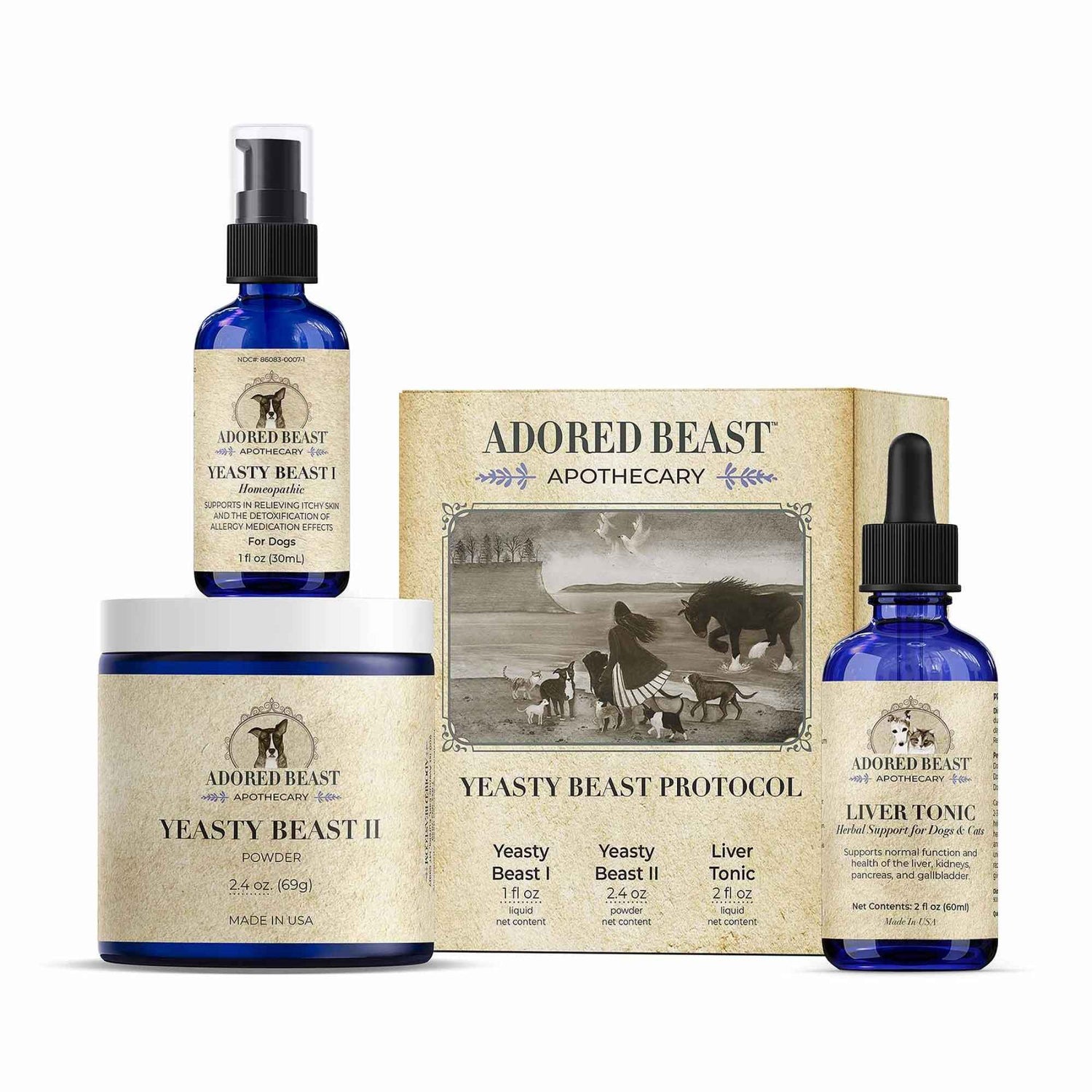
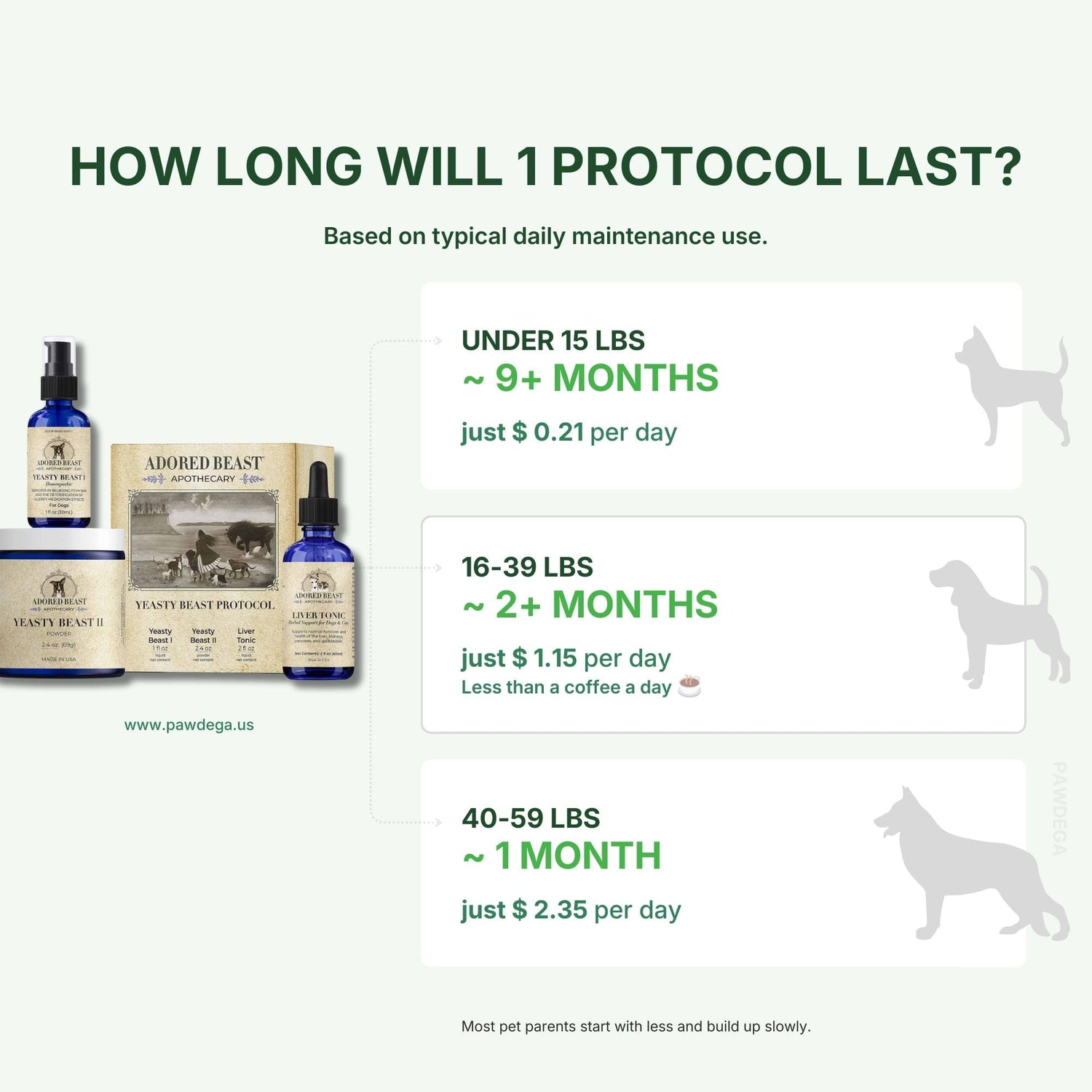
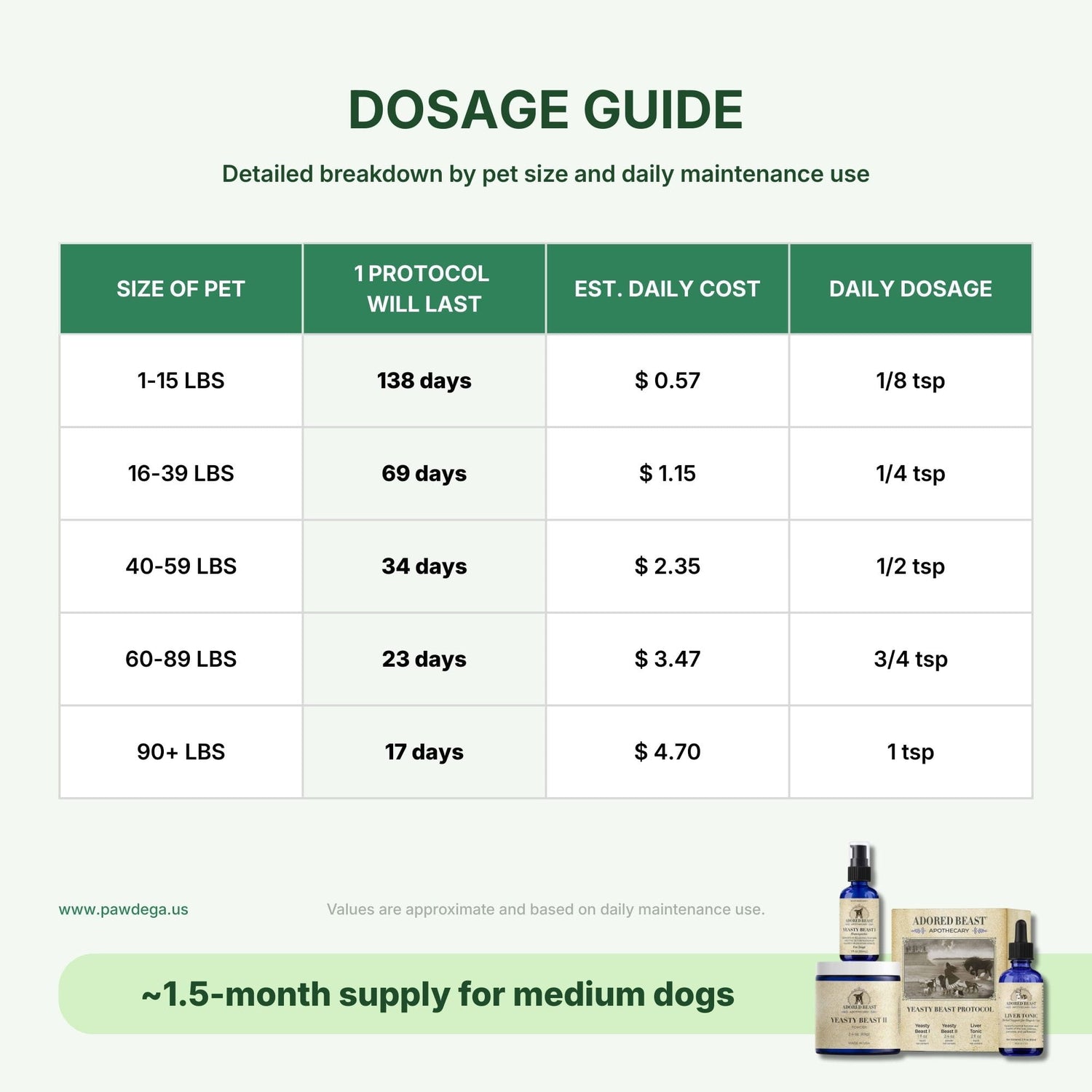
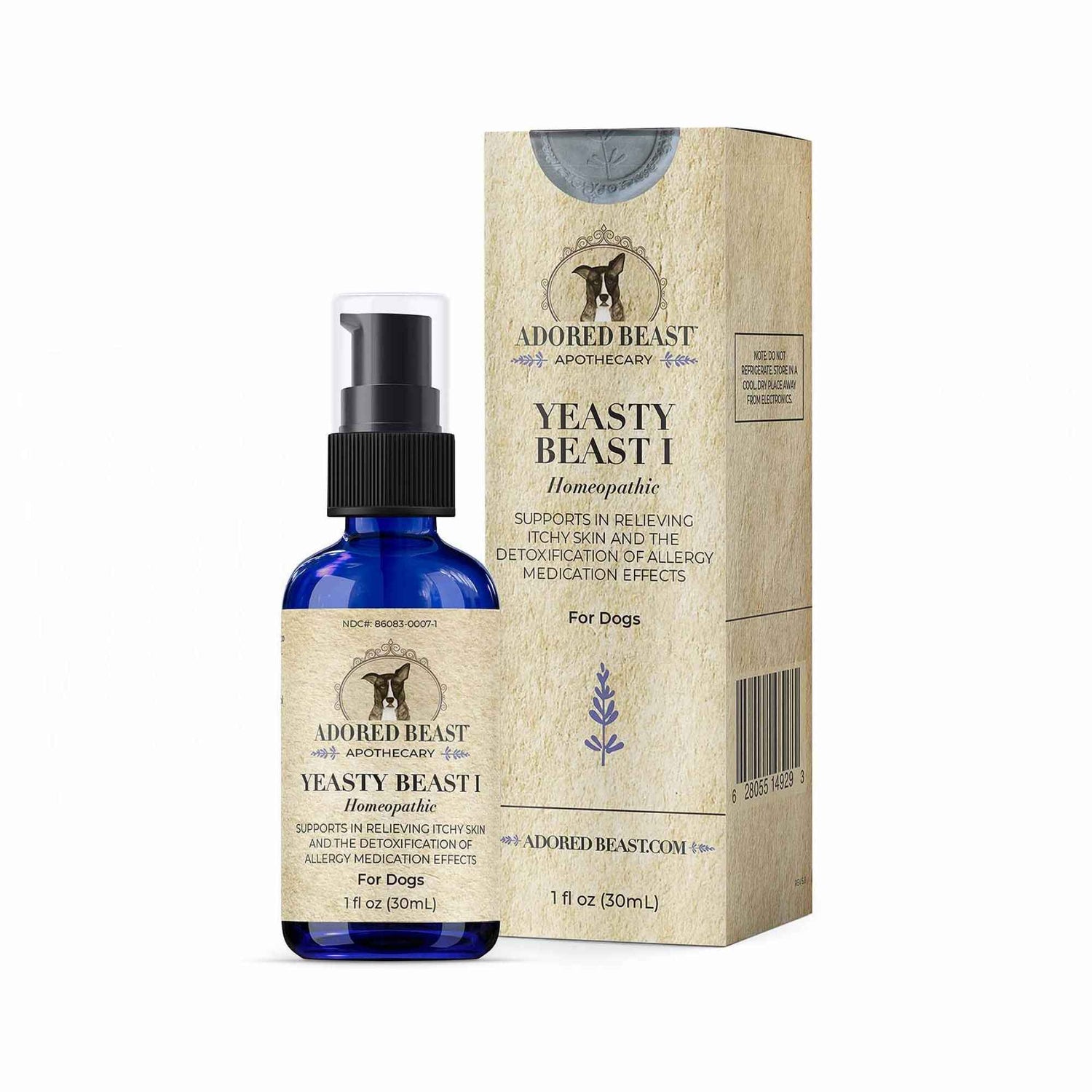
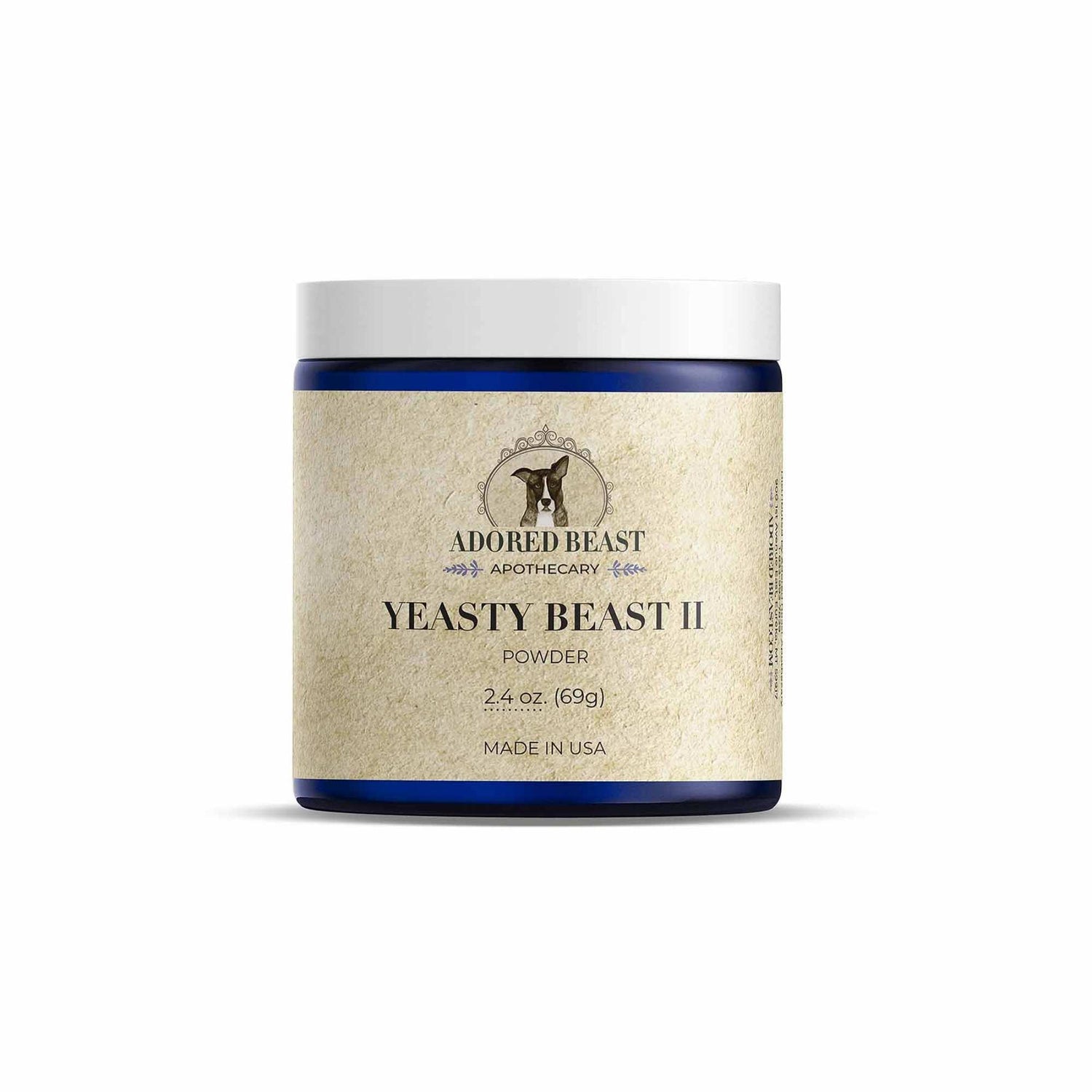
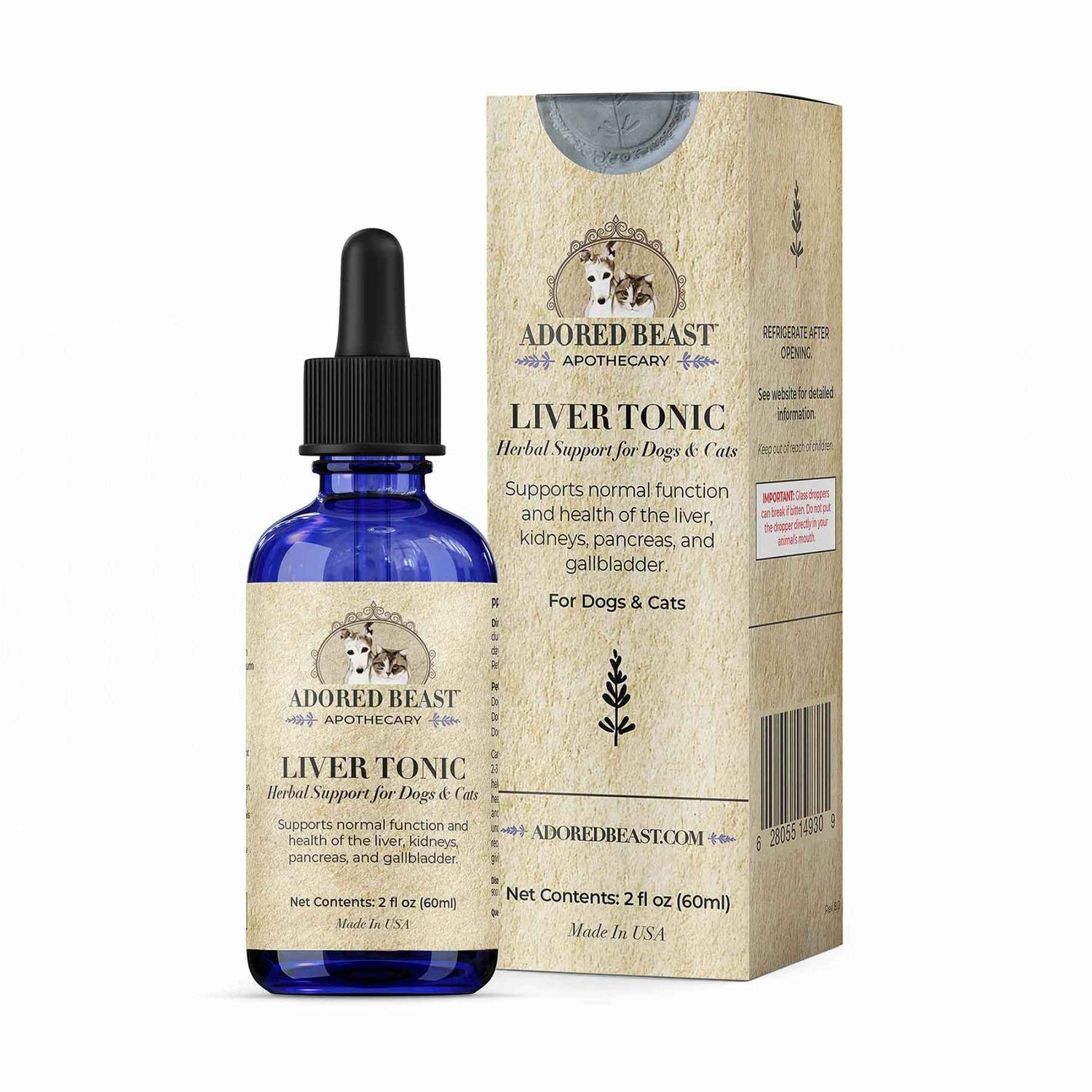
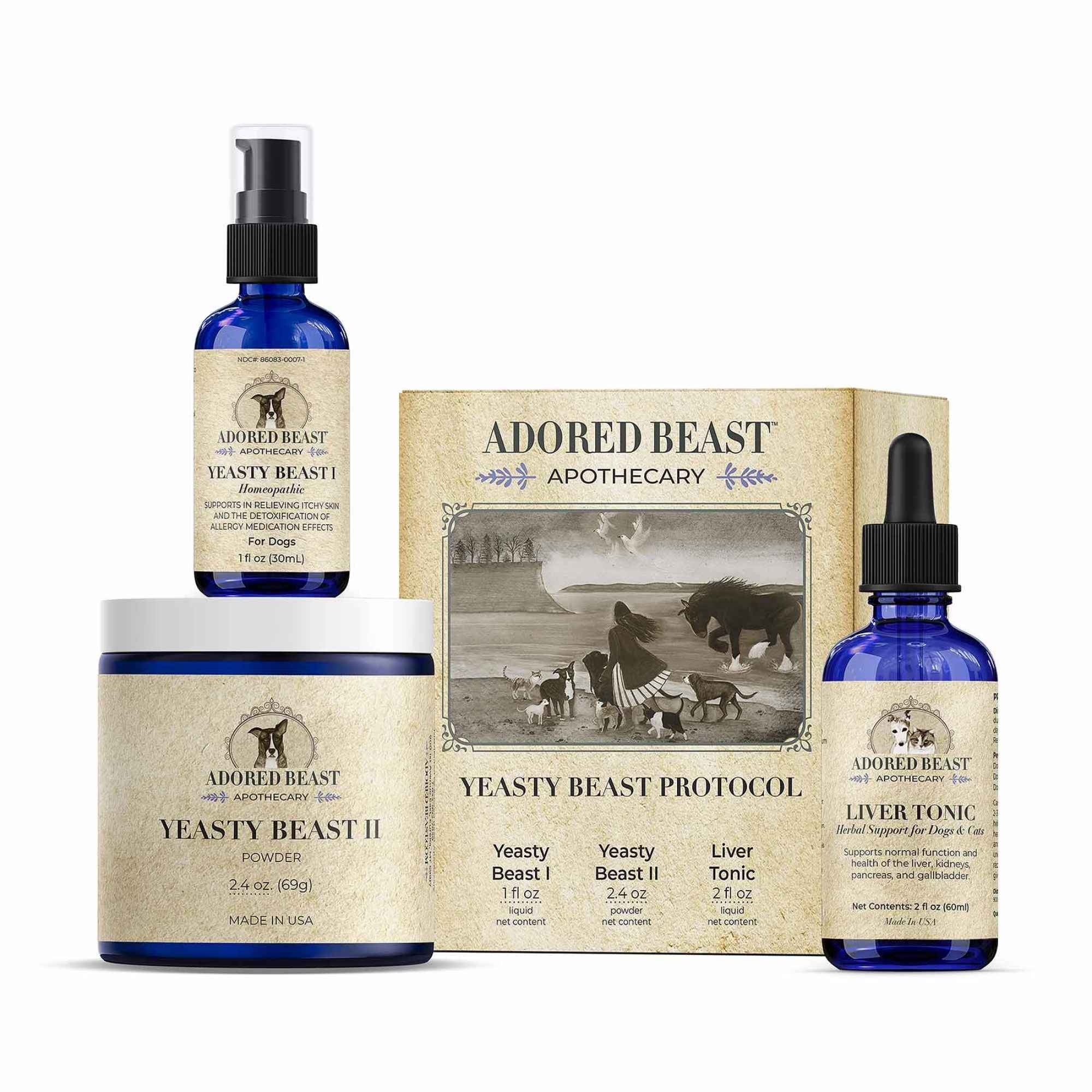
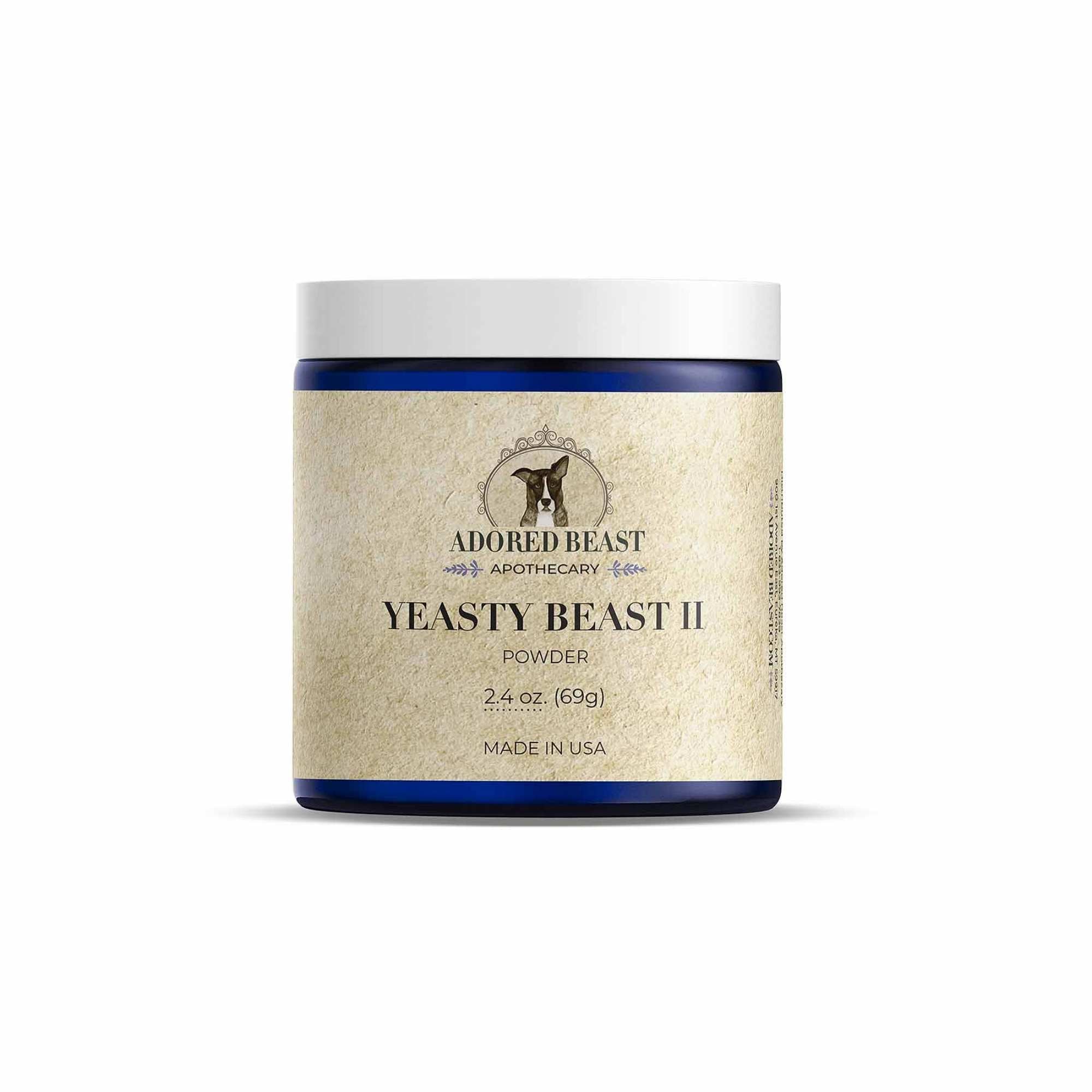
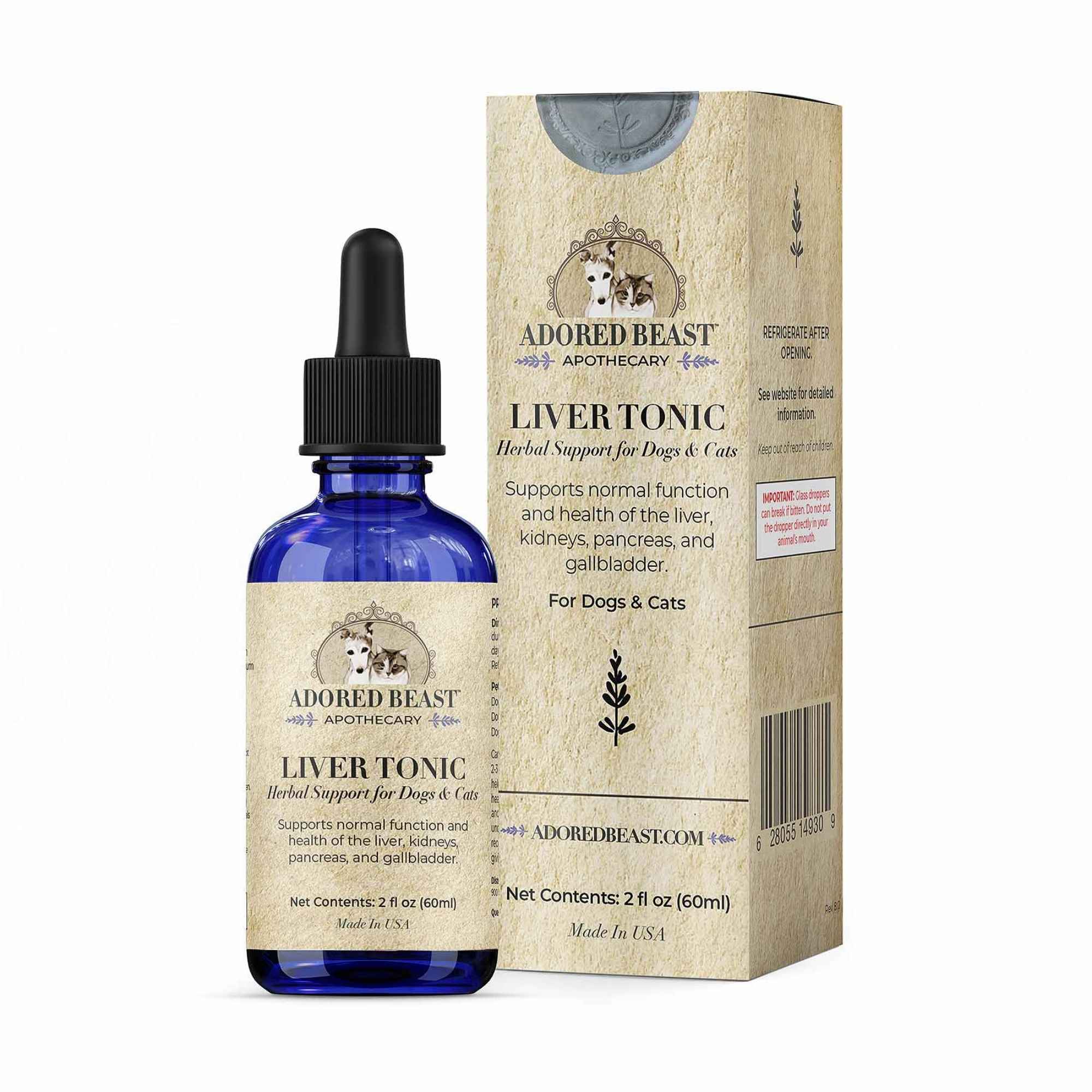
The Yeasty Beast Protocol is designed to reduce yeast gently, using diet first so the yeast is weaker before herbs and enzymes come in, which is meant to soften the die-off rather than trigger it. Fido's Flora is a species-specific probiotic that also contains fulvic and humic acid, intended to help re-establish healthy gut bacteria while supporting the body's own detox pathways. Liver Tonic supports the liver through all of that work. And the Leaky Gut Protocol is there to support the integrity of the gut lining when yeast and leaky gut are tangled together.
If cycling through all four feels like a lot to assemble, the Allergy and Yeast Relief Protocol brings these pieces together in one bundle. This is not a quick fix, and I would never sell it as one. Supporting a dog who has struggled for years is usually a matter of months, not days.
Does my dog's environment matter too?
It can. Alongside diet and gut support, the home environment is a layer worth a look, both what is in the air and what your dog lies on all day.
Scented candles, plug-in air fresheners, and many conventional cleaning products release volatile organic compounds, commonly shortened to VOCs. PetMD points to a study published in Environmental Impact Assessment Review that tested top-selling air fresheners and laundry detergents and found 133 different VOCs across 25 products, with two dozen of them classified as toxic or hazardous under federal law. Veterinary sources note that these compounds can irritate a dog's skin and airways, showing up as itching, allergic-type skin reactions, coughing, or sneezing, on top of whatever is already driving the yeast and allergy picture. For a dog already dealing with itchy skin, this is one more layer worth removing rather than adding. Swapping scented candles and sprays for fresh air, and conventional floor and surface cleaners for natural, fragrance-free alternatives, is a reasonable place to start.
A second practical suggestion, offered as experience rather than proven science: many holistic practitioners favor breathable natural fibers like cotton over synthetic, vinyl, or polyester surfaces for a yeasty dog, on the reasoning that synthetics trap warmth and moisture. Covering couches and dog beds with cotton sheets you can wash often is a low-cost thing to try. I want to be clear that this second point is a reasonable idea from practitioner experience, not something backed by a specific canine study, unlike the VOC research above.
The bigger picture
Since Milka's own journey with itchy skin and gut trouble as a puppy, I have learned that healing is rarely a straight line. It is often five steps forward and three steps back, and you are still two steps ahead.
If your dog has been struggling for months or years, and you have been quietly wondering if you are failing them, you are not. You have been missing a layer. Now you know what to look for, and you have a way to read what your dog's body is telling you.
There really is no such thing as no solutions.
Much Love, Larry
Sources
- Åhman S, et al. "Malassezia dermatitis in dogs and cats." Veterinary Dermatology (ScienceDirect review), 2024. https://www.sciencedirect.com/science/article/pii/S1090023324000236
- University of Illinois College of Veterinary Medicine. "Malassezia Dermatitis in Dogs and Cats," 2019. https://vetmed.illinois.edu/2019/04/16/malassezia-dermatitis-dogs-cats/
- VCA Animal Hospitals. "Yeast Dermatitis in Dogs." https://vcahospitals.com/know-your-pet/yeast-dermatitis-in-dogs
- Dhakal A, Sbar E. "Jarisch-Herxheimer Reaction." StatPearls, NCBI Bookshelf, 2025. https://www.ncbi.nlm.nih.gov/books/NBK557820/
- PetMD. "Apoquel for Dogs," updated. https://www.petmd.com/pet-medication/apoquel-for-dogs
- Journal of the American Veterinary Medical Association. "Clinical, clinicopathologic, and hepatic histopathologic features associated with probable ketoconazole-induced liver injury in dogs: 15 cases (2015-2018)," 2020. https://avmajournals.avma.org/view/journals/javma/256/11/javma.256.11.1245.xml
- VCA Animal Hospitals. "Leaky Gut Syndrome in Dogs." https://vcahospitals.com/know-your-pet/leaky-gut-syndrome-in-dogs
- PetMD. "Are Air Fresheners Safe for Pets?" https://www.petmd.com/dog/care/air-fresheners-and-pets
A quick, honest note: I am not a veterinarian, and this is educational content, not medical advice. Every dog is an individual. For anything ongoing or serious, and before changing or stopping any medication, please work alongside your vet, ideally a holistic or integrative vet.