Most dogs living with a luxating patella never have an operation. In the largest primary-care study on this condition, covering 210,824 dogs in England, 39% of new cases were managed medically and only 13.2% went to surgery. Here is the honest version of what that management can and cannot do. Conservative care for a luxating patella will not change your dog's grade or reshape the bone underneath it, but it can reduce how often the kneecap slips and slow the joint damage that follows. It works through three levers: a lean body weight, targeted muscle strength, and controlled daily load. Grade 3 and grade 4 knees usually need surgical correction.
If your vet told you your dog has a luxating patella and then said "let's watch it," you probably left that appointment with a hollow feeling.
Watch it for what. Watch it how. Watch it until when.
That gap is the reason I wanted to write this. The veterinary pages explain the anatomy beautifully and then hand you four bullet points. The rest of the internet wants to tell you what surgery costs. Almost nobody is writing for the dog in the middle, the one who skips a few times a week and is otherwise living a completely normal life.
Can a luxating patella in dogs be fixed without surgery?
No, and any page telling you otherwise is selling something.
The kneecap slips because of how the leg is built. In most affected dogs the groove at the end of the thigh bone is too shallow, or the whole limb is slightly misaligned, so the kneecap has nothing solid holding it in its track. The Merck Veterinary Manual describes it as a developmental orthopedic disorder, caused by abnormal development of the surrounding structures rather than by the kneecap itself. No supplement, exercise, or brace changes bone shape.
So here is the reframe that matters. You are not trying to fix the knee. You are trying to change how often it slips, how much it hurts when it does, and how fast arthritis builds in the joint. Those three things are genuinely within your influence.
Veterinary surgeons writing in Vet Times put it plainly from clinical experience: conservative management may reduce how frequently signs appear, but it is unlikely to improve the grade of the luxation. I would rather tell you that up front than let you believe six months of exercises will make it go away.
What is actually happening inside your dog's knee?
The kneecap normally rides up and down a groove at the end of the thigh bone, held in line by the tendon of the big thigh muscle. When the alignment is off, the kneecap pops sideways out of that groove. About three quarters of the time it slips inward, toward the other leg, which is called medial patellar luxation and is by far the most common pattern in small dogs.
Severity is scored 1 to 4:
| Grade | What the kneecap does | What you may notice at home |
|---|---|---|
| Grade 1 | Can be pushed out of the groove by hand, and returns to it on its own. | Mild and infrequent signs, or nothing visible at all. |
| Grade 2 | Slips out on its own or with handling and can stay out for a while. Goes back by hand, or when the leg is straightened. | Intermittent lameness, or the classic skipping step. |
| Grade 3 | Sits out of the groove most of the time. Can be put back by hand, but slips straight back out. | Consistent lameness, with bone deformity now evident. |
| Grade 4 | Permanently out of the groove and cannot be put back by hand. | Severe lameness and limb deformity, often a crouched stance on bent knees. |
Grade definitions per the Merck Veterinary Manual (source 2).
Here is the part almost nobody tells you clearly, and it changes how you should think about monitoring. As Today's Veterinary Practice points out, the grade is a single snapshot in time. A grade 2 dog can look fine at an appointment while the kneecap is quietly wearing down the inner ridge of the groove it keeps sliding over. Cornell's Riney Canine Health Center describes the same progression: the more the kneecap displaces, the more it rubs the joint cartilage, which leads to arthritis. That repeated strain also raises the risk of cruciate ligament rupture later on.
Which is exactly why "watch it" is not a plan. Watching without doing anything means letting that wear accumulate.
Which dogs get a luxating patella?
The VetCompass epidemiology study found patellar luxation recorded in 1.3% of dogs overall, with eleven breeds at raised odds compared with crossbreeds. The Pomeranian and Chihuahua topped the list. The French Bulldog was named too, which is why this one lands close to home for me.
A separate review in Veterinary Medicine: Research and Reports reports that medial luxation is roughly twelve times more common in small breeds than large ones, and that most cases are picked up within the first three years of life. The VetCompass data also found higher odds in female dogs, in neutered dogs, and in dogs sitting below the average weight for their breed and sex.
Worth being careful with that last group. Being small for your breed is a marker here, not a reason to fatten your dog up. Extra weight is the one thing you can control, and it works in the opposite direction.
The three levers: what actually moves the needle
This is the plan I would want if my dog were the one skipping. Three levers, in order of how much evidence sits behind them.
1. Get your dog genuinely lean, and know the number.
This is the most evidence-backed thing on the entire list, and it is free.
A study in Veterinary Research Communications followed obese dogs with arthritis through a weight-loss programme and measured lameness objectively as well as by eye. Lameness scores improved significantly once body weight had dropped by 6.10%, with gait-analysis confirmation from 8.85%. An earlier study of dogs with hip arthritis saw significant improvement in hind limb lameness after 11% to 18% weight loss.
Put that in real terms. For a 20 pound dog, 6% is about 1.2 pounds. That is a number you can act on this month. For a 12 pound Chihuahua, it is around 11 ounces.
You should be able to feel your dog's ribs under light pressure without digging, see a waist from above, and see a tuck from the side. If you cannot, this lever is where your energy belongs before you spend a dirham or a dollar on anything else.
2. Build the muscle that holds the kneecap in line.
A strong thigh muscle with good tension keeps the kneecap tracking where it belongs. Today's Veterinary Practice lists targeted strengthening of the quadriceps and outer thigh as a core part of conservative management, using sit-to-stand repetitions, step-ups, hill walking, balance work, and swimming or underwater treadmill.
An honest caveat, because this is where most holistic content overreaches. A 2026 review in Frontiers in Veterinary Science built a rehabilitation framework for this exact condition by translating evidence from human patellofemoral pain, and the authors state clearly that canine clinical studies are still needed to validate it. The reasoning is sound and the exercises are low-risk. The canine trial data is not there yet. Both things are true.
Work with a certified canine rehabilitation practitioner rather than guessing from a video. Loading a misaligned knee badly is worse than not loading it.
3. Take the spikes out of their daily load.
The knee copes reasonably well with steady, moderate movement. What it hates is the sudden stuff: launching off the sofa, sprinting on tile, twisting at speed on a slick floor.
- Runners and mats on smooth floors, especially on her usual routes
- Ramps or steps at the sofa and bed, and a habit of lifting her down
- Regular, moderate walks over weekend-warrior bursts
- Nails kept short, because long nails change how the whole foot loads
- No off-lead sprinting into tight turns while signs are active
Which joint supplements actually have evidence in dogs?
This is where I have to disagree with almost every page ranking above this one, because the standard advice has not caught up with the research.
| Ingredient | What the canine evidence shows |
|---|---|
| Omega-3 (EPA and DHA) | The strongest of the group. Multiple systematic reviews single it out as the one nutraceutical with good supporting evidence. |
| Green-lipped mussel | Promising, from a randomised controlled trial in dogs with arthritis. |
| Undenatured type II collagen (UC-II) | Some real canine data, though reviewers rate overall collagen evidence as weak. |
| Turmeric and curcumin | Limited canine-specific evidence, mostly extrapolated from human work. |
| Glucosamine and chondroitin | A 2022 meta-analysis found a marked non-effect and recommended these no longer be advised for joint pain in dogs and cats. |
That last row deserves a second look, because glucosamine is the single most recommended supplement for this condition and has been for two decades.
A 2012 systematic review in the Journal of Veterinary Internal Medicine rated the strength of evidence as low across all eleven nutraceuticals it examined, with one exception: diets enriched with omega-3, which it rated good. A 2024 review in the Journal of Small Animal Practice confirmed that neither of the two prior systematic reviews found any benefit from glucosamine hydrochloride and chondroitin sulphate, while both supported omega-3.
The omega-3 evidence is worth seeing in detail. In a randomised, double-blinded trial published in JAVMA, dogs were fed either a normal diet or one high in fish oil, and their weight bearing was measured on a force plate rather than guessed at by their people. 82% of the dogs on the omega-3 diet improved in how much weight they put through their worst limb.
So if you are going to add one thing, add a well-dosed omega-3, not a glucosamine chew. We carry Potent-Sea algae oil for exactly this reason, an algae-based EPA and DHA source without the heavy metal and rancidity concerns that come with fish oil. Everything else in our joint and mobility range sits underneath that as support, not instead of it.
If you add one thing, add this
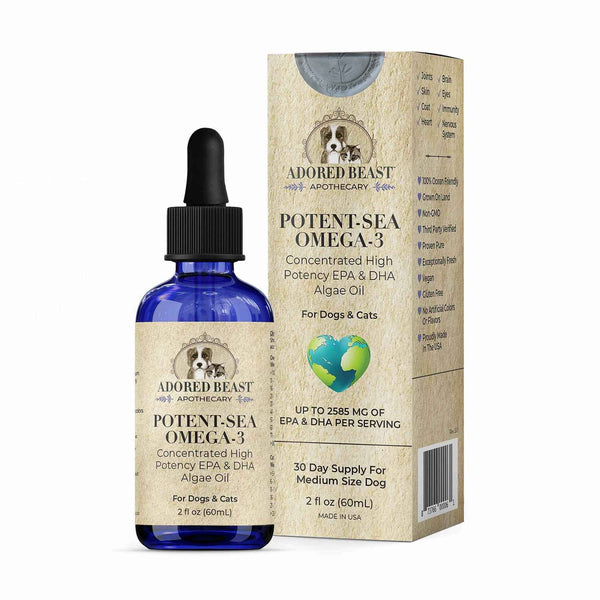
Potent-Sea Omega-3 Oil | EPA & DHA
Omega-3 is the one ingredient in the table above that reviewers rate as having good canine evidence. This is the version we use and stock: EPA and DHA grown from marine algae on land, so the heavy metal and rancidity questions that follow fish oil do not apply.
- Concentrated EPA and DHA, so most dogs need only a few drops on food
- Free from solvents, pesticides, and heavy metals
- Supports joints, skin and coat, brain, heart, and immune function
Omega-3 is a long-term daily addition rather than a short course, so it is also available on Subscribe & Save.
What we use for Milka, and where I am speculating
I want to draw a clear line here, because it matters.
When our French Bulldog Milka had an IVDD injury, we managed her recovery naturally under veterinary supervision, and I wrote the whole thing up in Milka's natural IVDD recovery plan. Part of that protocol included Jump for JOYnts, elk antler powder, bone broth, and Healthy Hip & Joints golden paste. She recovered fully and she is a thriving senior today.
That is my experience with my own dog. It is not clinical evidence, and I am not going to dress it up as such. There are no canine trials behind elk antler or the homeopathic remedies we reached for. I use them, I believe they helped her, and you deserve to know exactly which category that belongs in. We also used red light therapy during Milka's rehab, which has some supporting evidence in dogs, though less than most marketing suggests.
Larry's own shelf, not the evidence base
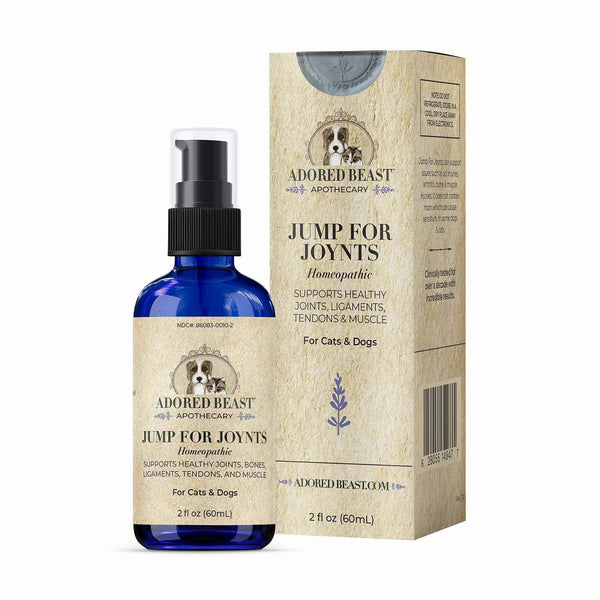
Jump for JOYnts, Joint Support
Different job from the omega-3. This is the one I reach for around flare-ups and hard days, when a knee has been slipping and I want to support comfort and mobility rather than slow arthritis over years. It is a homeopathic combination remedy, so read it as my experience and the reports of other pet parents, not as trial data. The section above is the honest framing.
One pet parent's review on the product page reports finding out her dog had grade 2 to 3 patellar luxation, using Jump for JOYnts consistently, and that her dog's patella has been stable for some time since. Caroline E., verified reviewer.
See Jump for JOYntsTwo sizes, dogs and cats, or a larger bottle that covers horses too. Also available on Subscribe & Save.
Where I will not hedge: get her lean, build the muscle, manage the load, add omega-3. That part is not my opinion.
When does surgery become the right call?
When conservative management stops being enough, and the honest answer is that this is a clinical judgement, not a formula.
Grade 3 and grade 4 knees generally need surgical correction. Below that, most surgeons weigh how often signs appear and how much function is lost rather than the grade alone. A dog skipping several times a week with a visibly altered gait is in a different conversation from a dog who hops twice a month.
Surgery works well for most dogs. Clinical outcome improves in over 90% of surgically managed dogs. It is also real surgery with real risk: one retrospective study of 119 knees reported complications in 24%, with 9% needing revision, and its review of the wider literature put published complication rates between 18% and 43%, with 7% to 18% classed as major. A 2019 study looking specifically at dogs under 20 kg found a high complication rate in that weight group.
US costs are commonly quoted between roughly $1,000 and $5,000 per knee, though I want to flag that this range comes from veterinary and pet insurance estimates rather than peer-reviewed data, and it varies enormously by region and surgeon.
One more gap worth naming, because it shapes every decision in this article: there is no head-to-head trial comparing conservative management against surgery for this condition. I went looking for it. It does not exist. Anyone giving you a confident universal answer is filling that gap with opinion, including the people telling you to skip surgery entirely.
Conservative management vs surgery, side by side
Since no trial compares these two paths directly, the useful thing I can give you is a clear view of what each one asks and what each one delivers, drawn from the sources below. Take it to your vet as a conversation starter, not as a decision.
| Conservative management | Surgical correction | |
|---|---|---|
| What it changes | How often the kneecap slips, comfort, and the rate arthritis builds. It does not change the grade or the bone shape underneath. | The structure itself. Techniques realign the quadriceps mechanism and can deepen the groove the kneecap rides in. |
| Usually suits | Mild, infrequent signs. Grade 1 and some grade 2 knees with little or no lameness, older dogs, and dogs for whom surgery is not feasible. | Grade 3 and grade 4 knees, marked lameness, and dogs whose signs are progressively worsening. |
| What it asks of you | Something every single day: weight kept lean, muscle work with a rehab professional, and load managed at home for the rest of her life. | One procedure, then a structured recovery period. Weight and conditioning still matter afterwards. |
| Strength of evidence | Weight loss is well supported, with measured lameness improvement from around 6% body weight reduction. Omega-3 is supported. The rehab framework is reasoned but not yet validated in dogs. | Clinical outcome improves in over 90% of surgically managed dogs. |
| Main downside | Joint wear can still progress, because the underlying anatomy is unchanged. | One study of 119 knees reported complications in 24%, with 9% needing revision. Published rates across the literature run 18% to 43%. |
| Can you change course | Yes. The surgical door stays open, which is the main strategic argument for starting here in a middle-grade knee. | No. Once the bone and soft tissue are altered, that is the new baseline. |
Compiled from sources 1 to 8 below. No study has compared these two paths head to head, so this table sets out what each approach involves rather than declaring a winner.
The honest bottom line
A luxating patella is a structural problem, so the goal is not to make it disappear. The goal is fewer episodes, less pain, and slower arthritis, and you have real leverage over all three.
Get her lean, and know your 6% number. Build the thigh and hip muscle with a rehab professional. Take the spikes out of her daily movement. Add omega-3 and skip the glucosamine. Have your vet re-grade the knee at every visit, because the grade is a snapshot and snapshots change.
And keep the surgical door open without walking through it prematurely. Choosing conservative management is not choosing to do nothing. Done properly, it is the more demanding of the two paths, because it asks something of you every single day.
You are not powerless here. You are the one who decides what her knees carry.
Much love, Larry
Sources
- The epidemiology of patellar luxation in dogs attending primary-care veterinary practices in England. O'Neill et al., Canine Genetics and Epidemiology, 2016. link.springer.com
- Patellar Luxation in Dogs and Cats. Merck Veterinary Manual. merckvetmanual.com
- Patellar luxation. Cornell University College of Veterinary Medicine, Riney Canine Health Center. vet.cornell.edu
- Patellar luxation in dogs. Di Dona et al., Veterinary Medicine: Research and Reports, 2018. dovepress.com
- Canine Patellar Luxation: Diagnosis and Treatment Options for General Practitioners. Today's Veterinary Practice, 2025. todaysveterinarypractice.com
- Canine patellar luxation part 2: treatments and outcomes. Vet Times, 2016. vettimes.com
- Comparison of complication rates of unilateral, staged bilateral, and single-session bilateral surgery for the treatment of bilateral medial patellar luxation in dogs. 2016. pmc.ncbi.nlm.nih.gov
- Complications Following Surgical Correction of Medial Patellar Luxation in Small-to-Medium-Size Dogs. 2019. pubmed.ncbi.nlm.nih.gov
- Evaluation of the effects of dietary supplementation with fish oil omega-3 fatty acids on weight bearing in dogs with osteoarthritis. Roush et al., Journal of the American Veterinary Medical Association, 2010. avmajournals.avma.org
- A 2022 Systematic Review and Meta-Analysis of Enriched Therapeutic Diets and Nutraceuticals in Canine and Feline Osteoarthritis. Barbeau-Gregoire et al., 2022. ncbi.nlm.nih.gov
- Systematic Review of Efficacy of Nutraceuticals to Alleviate Clinical Signs of Osteoarthritis. Vandeweerd et al., Journal of Veterinary Internal Medicine, 2012. onlinelibrary.wiley.com
- Current evidence for non-pharmaceutical, non-surgical treatments of canine osteoarthritis. Pye et al., Journal of Small Animal Practice, 2024. onlinelibrary.wiley.com
- The effect of weight loss on lameness in obese dogs with osteoarthritis. Marshall et al., Veterinary Research Communications, 2010. pubmed.ncbi.nlm.nih.gov
- Effect of weight reduction on clinical signs of lameness in dogs with hip osteoarthritis. Impellizeri et al., 2000. pubmed.ncbi.nlm.nih.gov
- Translational rehabilitation strategies for canine medial patellar luxation: insights from human patellofemoral pain syndrome. Frontiers in Veterinary Science, 2026. frontiersin.org
- Evaluation of the Effects of Undenatured Type II Collagen (UC-II) as Compared to Robenacoxib on the Mobility Impairment Induced by Osteoarthritis in Dogs. Stabile et al., 2019. ncbi.nlm.nih.gov
- Evaluating Complementary Therapies for Canine Osteoarthritis Part I: Green-lipped Mussel. Hielm-Bjorkman et al., Evidence-Based Complementary and Alternative Medicine, 2009. pubmed.ncbi.nlm.nih.gov
Disclaimer: This blog may contain affiliate links, and PAWDEGA may earn a small commission at no extra cost to you if you purchase through them. It may also link to products on our website, and this content is for educational purposes, not a replacement for veterinary advice.