The best shampoo for dogs with yeast is a clean, non-medicated formula built around naturally antifungal ingredients like tea tree and peppermint, worked down to the skin and left on for a full 10 minutes before rinsing, two to three times a week during a flare. But here is what most articles will not tell you: no shampoo, medicated or natural, resolves yeast on its own. Yeast on the skin is a surface signal of an internal imbalance. The right shampoo calms and cleans the skin while you address the real root: the gut, the immune system, and any underlying allergy driving the overgrowth.
Here is the one line to hold onto: yeast on a dog's skin is a symptom, not the disease, so the best shampoo is the one that supports the skin barrier while you resolve the internal root.
In this guide
- Why does my dog smell yeasty in the first place?
- Should you use a medicated or a natural shampoo for yeast?
- What is the best shampoo for dogs with yeast, and is natural better?
- How do you bathe a dog with yeast the right way?
- Does diet cause yeast in dogs, and does sugar feed yeast?
- What actually resolves yeast: supporting the internal root
- The honest bottom line
- Sources
Let's be real for a second. If your dog smells like corn chips, scratches at the same paws every night, or has that greasy, musty coat that comes back three days after every bath, you have probably already fallen down the shampoo rabbit hole. I have been there with my French Bulldog, Milka. Frenchies come with adorable skin folds and a long history of sensitive skin, and Milka had chronic skin issues as a puppy. So I want to give you the honest version of what works, not the recycled advice you will find on every other page.
Why does my dog smell yeasty in the first place?
That distinct, yeasty, corn-chip smell almost always comes from one organism: Malassezia pachydermatis. It is a yeast that lives on every healthy dog's skin in small numbers. Research in veterinary dermatology describes it as a normal resident that only becomes a problem when the skin's balance is disrupted by allergies, skin folds, trapped moisture, hormonal changes, or a stressed immune system.
One detail matters more than almost anyone mentions. This yeast is lipophilic, meaning it lives on and feeds off the fats and oils on the skin's surface. It cannot even build its own fatty acids, so it harvests them from the coat. Keep that fact in your pocket, because it completely changes the diet conversation later.
A few things worth knowing:
- Yeast overgrowth is almost always secondary. It rides on top of another issue, most often an allergy or a warm, moist environment like ear canals and skin folds. This is why breeds like Milka, with folds and a genetic tendency toward sensitive skin, are more prone to yeast infections.
- It is common in the ears. In dogs seen for outer ear infections, up to 70 percent of cases involve this yeast, according to a 2020 veterinary dermatology overview.
- It is not contagious. The overgrowth comes from your own dog's skin balance shifting, not from something passed between animals or to you.
So when you smell yeast, your dog is telling you something upstream is off. This is the exact trap we unpack in our podcast episode, Yeast in Dogs: The Hidden Cause of Allergies, Ear Infections & Itchy Skin, because so much of what gets chalked up to allergies is really yeast doing the talking. The shampoo is how you get comfort and control at the surface. It is not the whole answer.
Should you use a medicated or a natural shampoo for yeast?
Both have a place, and I am not here to bash your vet. For a severe, painful, or spreading yeast infection, a prescription medicated shampoo confirmed and guided by your veterinarian may be the right call, and I would never talk you out of it. Where I land differently is for mild to moderate cases, for ongoing maintenance, and for the dog who flares every few weeks and lives on repeat baths.
Here is the honest comparison:
| Approach | How it works | Best for | Watch-outs |
|---|---|---|---|
| Medicated shampoo (chlorhexidine, ketoconazole, miconazole) | Synthetic antifungals and antiseptics reduce yeast on the skin surface | Severe or vet-confirmed infections, under veterinary guidance | Can strip natural coat oils, dry and irritate sensitive skin, and may need to alternate with a gentler product |
| Clean, non-medicated shampoo (tea tree, peppermint, botanicals) | Naturally antifungal ingredients calm the skin and support a balanced skin microbiome | Mild to moderate cases, frequent bathing, and long-term maintenance | Works best as part of a whole-dog approach, not as a standalone fix |
The reason I lean non-medicated for most dogs is simple. When you are bathing two or three times a week, a harsh formula can wreck the skin barrier you are trying to rebuild. A gentle, genuinely clean shampoo lets you bathe as often as the flare needs without stripping the coat.
What is the best shampoo for dogs with yeast, and is natural better?
When people ask me to name the best natural dog shampoo for yeast, the Cooling Organic Peppermint Dog Shampoo by 4-Legger is the one I reach for. It is a USDA certified organic formula built on tea tree and peppermint oil, and both of those earn their place in the bottle.
Here is what the research tells us. In lab testing, canine Malassezia strains have shown high susceptibility to tea tree oil, and a randomized, double-blind clinical trial found that a topical tea tree preparation helped dogs with localized itchy skin. Peppermint cools and calms the itch that drives the scratch-and-inflame cycle. This is not a miracle. The essential oil evidence is still developing, and some studies show mixed results. What is not in question is that concentrated tea tree oil is dangerous to dogs when misused, which is exactly why a properly formulated, correctly diluted product matters. Please do not make your own tea tree rinse at home.
The point of a shampoo like this is not to attack the yeast into submission. It is to support the skin barrier and discourage overgrowth while you work on the root. That is the product-as-support frame I hold to.
After the bath, the coat needs moisture back. Frequent bathing, even with a gentle formula, can leave the skin dry, and dry, damaged skin is more welcoming to yeast, not less. A conditioning step helps here. The RESTORE Organic Apple Cider Vinegar Conditioning Rinse, also by 4-Legger, puts moisture back into the coat after cleansing and supports the skin's natural pH, and veterinary dermatology guidance supports following a bath with a conditioner to reduce water loss and offset the drying effect of frequent bathing.
The bath pair I use on Milka
Cooling Organic Peppermint Shampoo + RESTORE Conditioning Rinse
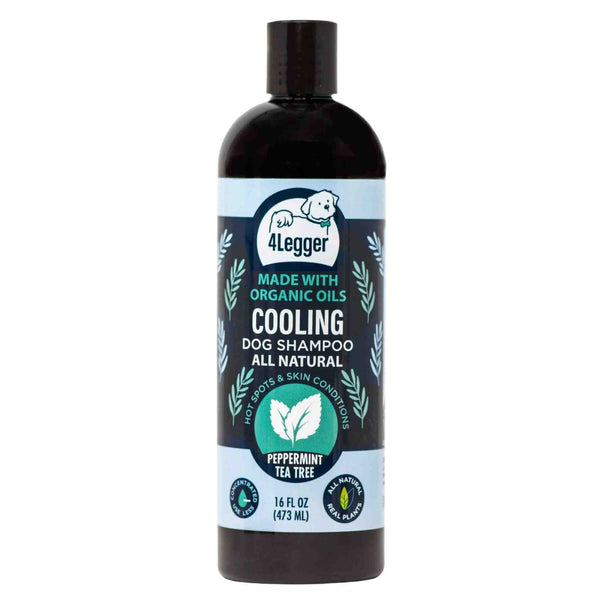
Cooling Organic Peppermint Shampoo
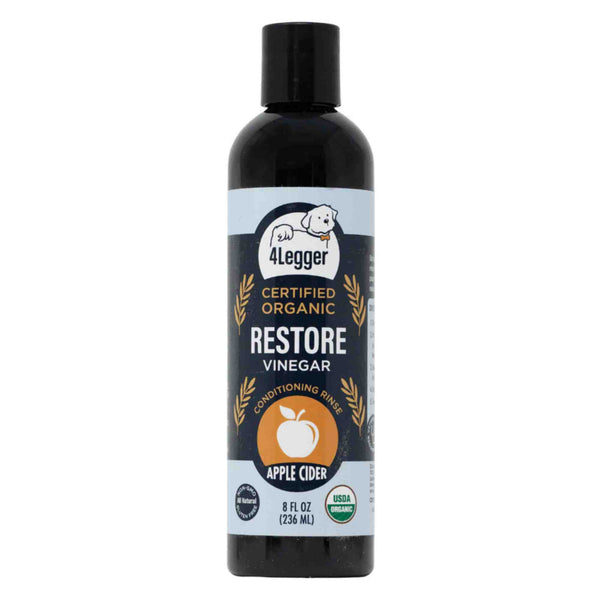
RESTORE Conditioning Rinse
Both USDA certified organic, both from 4-Legger, and both gentle enough for the two to three baths a week a flare calls for. The shampoo does the work at the skin with tea tree and peppermint. The rinse puts moisture back and supports the skin's natural pH so frequent bathing does not dry the coat out.
- Zero synthetics, zero detergents, zero sulfates
- Formulated for the 10-minute soak, not a rushed rinse
- Gentle enough for sensitive skin and frequent use
How do you bathe a dog with yeast the right way?
This is where most people lose the battle, and it comes down to one number: contact time. A shampoo cannot support the skin if it is on and off in 60 seconds. Veterinary sources, including guidance from a UC Davis veterinarian and multiple veterinary dermatology references, are consistent that the lather needs to sit on the skin for about 10 minutes before rinsing.
Here is the routine I follow with Milka:
- Soak the coat thoroughly with lukewarm water. Let the skin get properly wet for a minute or two first.
- Work the shampoo down to the skin, not only over the fur. Start with the yeasty hot spots: paws, armpits, groin, belly, and the outside of the ears and folds.
- Set a timer for 10 full minutes and let the lather sit. This is the step that actually does the work. Do not skip it.
- Rinse completely, until the water runs clear. Leftover residue can irritate the skin and undo the benefit.
- Dry thoroughly, especially in folds and between toes. Yeast loves trapped moisture, so a damp fold is an open invitation. Use towels and cool air, never hot air on inflamed skin.
- Condition. Follow with the RESTORE Conditioning Rinse to put moisture back into the coat, per the bottle's directions, since even a gentle shampoo can dry the skin with frequent bathing.
How often should you bathe a dog with yeast?
During an active flare, two to three baths a week is the veterinary-backed range. As the skin settles, taper down. For maintenance once things are calm, every one to two weeks is usually plenty. Let your dog's skin, not the calendar, set the pace.
Does diet cause yeast in dogs, and does sugar feed yeast?
This is the section I most want you to read, because it is where the popular advice and the actual science part ways.
You will read everywhere that sugar feeds yeast, so cutting carbs starves it. The observation underneath that advice is real. A lot of dogs on high-carb, ultra-processed food do improve when you change their diet. But the mechanism people give for it does not hold up for the yeast living on your dog's skin. Peer-reviewed veterinary research shows that Malassezia, the skin yeast behind most cases, cannot metabolize sugars. It is lipophilic, so it feeds on the fats and oils on the skin, not on the sugar in the bowl. The idea that dietary sugar travels to the skin and feeds the yeast directly was borrowed from human yeast conversations, and it does not map onto this organism.
So why do so many dogs still get better on a lower-carb or fresh diet? Because diet matters, for reasons that are actually better than the sugar story:
- Food allergy or sensitivity. If your dog reacts to a specific ingredient, that reaction inflames the skin, breaks down the barrier, and lets yeast overgrow. Remove the trigger and the whole cycle calms down. This is the strongest, best-supported link.
- The gut-skin connection. Ultra-processed, high-carb food can shift the gut microbiome and raise low-grade inflammation, which affects immune balance and how well the skin defends itself. This is where a fresh, species-appropriate diet earns its reputation.
- One real exception. A dog with diabetes or unmanaged high blood sugar is a different case, where infection risk genuinely rises. That is a medical situation to manage with your vet, not the everyday dog on kibble.
Know that when you move your dog to a fresh, species-appropriate, lower-carb diet, you are helping by calming inflammation, supporting the gut, and removing possible triggers, not by starving the yeast of sugar. The result is the same. The reason is more honest. If you want to go deeper, our guide on healing leaky gut in dogs and our walkthrough on gut health and the raw diet transition are the natural next reads.
What actually resolves yeast: supporting the internal root
If the shampoo is the surface, this is the foundation. Because yeast overgrowth is a whole-body signal, the most reliable results come from supporting the gut, the immune system, and the skin from the inside out.
This is where a structured approach helps. The Yeasty Beast Protocol is a three-part protocol formulated to help address yeast overgrowth and support gut balance at the same time, which is the combination that tends to hold. Alongside it, the Yeasty Beast III Topical Spray is an apple cider vinegar based spray you can use on yeasty spots between baths, a cleaner and more consistent version of the DIY vinegar rinses floating around the internet.
Under all of it sits the gut. The skin and the gut talk to each other constantly, so rebuilding a healthy microbiome after addressing yeast overgrowth is part of the long game. A daily pre and probiotic like Love Bugs supports that foundation.
For the internal root
Yeasty Beast Protocol
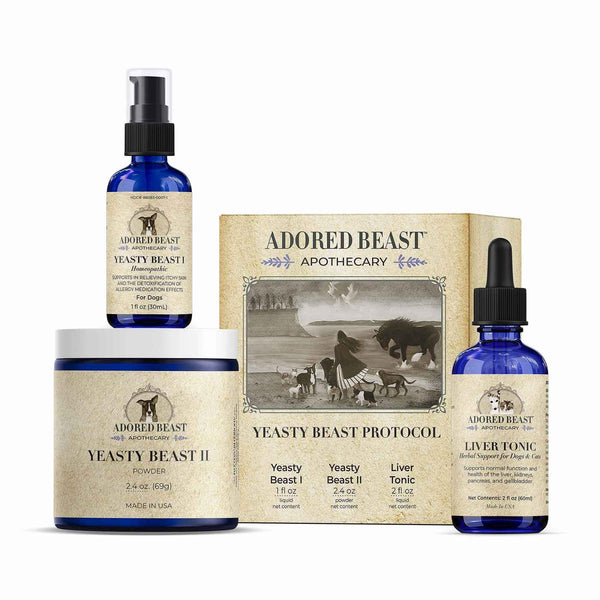
A shampoo works at the surface. This works underneath it. A three-part kit of gentle herbs and homeopathic preparations formulated to address yeast overgrowth from the inside while supporting gut balance, which is the combination that tends to hold once the baths taper off.
- Three components: Liver Tonic, Yeasty Beast I, and Yeasty Beast II
- Free from maltodextrin, cellulose, and other non-functional fillers
- Most dogs work through a single kit
None of this replaces your veterinarian. For a dog that is truly miserable, or for anything that keeps coming back, please work alongside a holistic or integrative vet who can look at the whole picture with you.
The honest bottom line
The best shampoo for dogs with yeast is a clean, non-medicated, correctly formulated one, used with a proper 10-minute soak and a good rinse, as often as the flare calls for. Pair it with a conditioning rinse so frequent bathing does not dry the skin. Then, and this is the part that separates dogs who improve for a week from dogs who actually turn the corner, support the internal root with gut and immune care, and address any underlying allergy through diet.
Milka is proof that you can get ahead of it. The corn-chip smell does not have to be your dog's permanent signature. Start at the skin, but do not stop there.
Much Love, Larry
Sources
- Bond R, et al. "Malassezia Yeasts in Veterinary Dermatology: An Updated Overview." Frontiers in Cellular and Infection Microbiology, 2020. Link
- "Malassezia dermatitis in dogs and cats." The Veterinary Journal (ScienceDirect), 2024. Link
- Weseler A, et al. "Antifungal effect of Australian tea tree oil on Malassezia pachydermatis isolated from canines suffering from cutaneous skin disease." 2002. Link
- Reichling J, et al. "Topical tea tree oil effective in canine localised pruritic dermatitis: a multi-centre randomised double-blind controlled clinical trial." Dtsch Tierarztl Wochenschr, 2004.
- "Antifungal Efficacy of Selected Plant Essential Oils Against Clinical Canine Isolates of Malassezia pachydermatis." Microorganisms (MDPI), 2025. Link
- "Tea tree oil exposure in cats and dogs." The Veterinary Nurse, 2023. Link
- "How to Bathe Dogs with Medicated Shampoo." VCA Animal Hospitals, 2026. Link
- Bain M, DVM (UC Davis) via Chewy. "Does Your Dog Need a Medicated Shampoo?" Link
- "Shampoo therapy in veterinary dermatology: Benefits and practical tips." PMC, 2024. Link
- "Yeast Infection in Dogs: Ears, Skin, and Paws." PetMD (veterinary-reviewed), 2026. Link
Disclaimer: This blog may contain affiliate links, and PAWDEGA may earn a small commission at no extra cost to you if you purchase through them. It may also link to products on our website, and this content is for educational purposes, not a replacement for veterinary advice.