The best mushroom supplement for dog lumps depends entirely on what the lump actually is, and nobody can know that by looking at it or feeling it. Once you know, turkey tail (Trametes versicolor) is the mushroom with the most veterinary research behind it, and chaga (Inonotus obliquus) is the one most often reached for with warts and benign skin bumps. Both are daily supports that sit alongside whatever your vet has planned, never instead of it.
Here is the sentence worth holding on to: turkey tail is the most clinically studied mushroom in veterinary medicine, but no published trial has ever shown a mushroom supplement shrinking a lump in a dog, which is why the needle test comes before the bottle.
On this page
- Why nobody can tell what a lump is by looking at it
- Is it safe alongside your vet's plan?
- Which mushroom, and when
- What the turkey tail research really shows
- Chaga for warts and bumps, and one real caution
- Will anything shrink a fatty lump?
- How to read a mushroom label
- What else supports the body
- When to stop watching and call
If you are reading this at 11pm with your hand still resting on your dog's shoulder, I know that feeling. You are not shopping. You are trying to work out what you are dealing with, and whether there is anything useful you can do while you wait for an appointment or a result.
So let's be real for a second. Most of what is written about mushrooms and dog lumps is written by people selling mushrooms, and almost all of it leaves out the least flattering half of the research. I am going to give you both halves.
Please keep in mind that I'm not a veterinarian, and this isn't medical advice. Every pet is unique, so I always recommend working alongside your vet, ideally a holistic or integrative vet, especially for anything ongoing or serious.
Why can't anyone tell what a dog lump is by looking at it?
Because lumps do not come with labels. Mast cell tumors, one of the most common skin cancers in dogs, have no typical appearance at all, which means any lump in or under the skin could be one, and specialists say so plainly. A mast cell tumor can feel exactly like a soft fatty lump under your fingers. So can several other things.
This is the part most pet parents are never told: your vet is not being cautious for the sake of it when they reach for a needle. Across skin and soft tissue samples submitted from dogs and cats, somewhere between 20 and 40 percent come back malignant. The only way to know which pile your dog's lump belongs in is a fine needle aspirate, a quick sample of cells drawn with a small needle, usually without sedation. For skin mast cell tumors, that single test gives an accurate answer in roughly 95 percent of cases.
Ten minutes in a consult room replaces months of watching and wondering. It also changes the answer to your actual question, because the mushroom that makes sense for a dog whose lump turned out to be a benign fatty mass is not the same one that makes sense for a dog with a confirmed cancer.
Is it safe to give a mushroom supplement alongside my vet's plan?
This is the question to answer first, before anything gets ordered, and most articles bury it at the bottom.
Turkey tail extracts have been given to dogs in a university clinical trial and were well tolerated, including in dogs recovering from surgery. In people, protein-bound turkey tail extracts have been used alongside conventional cancer care in Japan for decades, and Memorial Sloan Kettering's own herb monograph describes that adjuvant use. That is a reasonable safety picture, and it is why many integrative vets are comfortable with it.
What it is not is a blanket yes for your dog. Three things genuinely warrant a conversation with the vet who knows your dog's case:
- Your dog is on chemotherapy, steroids, or immune-suppressing medication. Anything that nudges immune activity deserves a second opinion from the person running the protocol.
- Your dog has kidney disease or a history of calcium oxalate stones. See the chaga section below, because that one is specific and real.
- Your dog is pregnant, nursing, or a very small puppy.
Write down what you want to give, the species name, the amount, and why. Hand it over at the next appointment. A vet who sees a specific, written plan responds very differently to one who is asked a vague question about mushrooms, and you are allowed to ask what else can be done. That question is not a criticism of the plan you are already following.
What is the best mushroom supplement for dog lumps?
Two mushrooms carry most of the weight here, and they are not interchangeable. Turkey tail is the immune one with canine research attached. Chaga is the antioxidant one traditionally associated with warts, skin bumps and general resilience.
| Turkey tail | Chaga | |
|---|---|---|
| Known for | Immune modulation through beta-glucans | One of the highest antioxidant loads of any food |
| Evidence in dogs | Two clinical trials at Penn Vet, the only canine trials of any medicinal mushroom | None published. Laboratory and human work only |
| Evidence elsewhere | Decades of human adjuvant trials, pooled in meta-analyses | Mostly cell and animal studies, plus traditional use |
| Main caution | Results have not been consistent across the two canine trials | Very high oxalate content. Kidney and stone history matter |
| Usually chosen for | A dog with a confirmed cancer, on a veterinary plan | Warts, papillomas, benign skin bumps, healthy aging |
Both work through the same broad mechanism. Beta-glucans, the long-chain sugars in fungal cell walls, are recognized by receptors on immune cells such as dectin-1, which sits on macrophages and dendritic cells. Binding those receptors switches on activity that reaches natural killer cells and T cells. That is well mapped biology, and it is the honest reason to be interested in mushrooms at all. It is also why nobody can promise you what will happen in one particular dog with one particular lump.
What does the research on turkey tail for dogs actually show?
Here is the study everyone quotes, and it deserves quoting. In 2012, a team at the University of Pennsylvania School of Veterinary Medicine gave a standardized turkey tail extract to dogs after spleen removal for hemangiosarcoma, an aggressive cancer of the blood vessel lining. The highest dose group, 100 mg per kg daily, reached a median survival of 199 days, and the spread of secondary growths was delayed. For a cancer where dogs having surgery alone are often measured in weeks, that result stood out, and it is the reason turkey tail entered pet wellness at all.
Two things keep it in proportion. It was a pilot study of fifteen dogs, five in each dose group, and a larger follow-up at the same school in 2022 did not reproduce the survival finding. What the canine work supports is turkey tail as a support used alongside veterinary care, not in place of it. A dog who is a candidate for conventional care should stay on it.
The human research is steadier. A systematic review and meta-analysis of randomized controlled trials of Coriolus versicolor (turkey tail) and reishi products, covering more than four thousand patients, found lower mortality in the groups receiving the extracts alongside conventional care. Different species, different disease, different bodies. It is supporting evidence, not proof that anything will happen for your dog.
Is chaga better for warts, bumps and skin growths?
Chaga is the mushroom most often reached for when the growths in question are warts, papillomas and benign skin bumps, and it carries one of the highest antioxidant loads of any food we can put in a bowl. That tradition is long and the laboratory work is interesting. What does not exist is a published canine trial. Anyone who tells you chaga has been shown to reduce lumps in dogs is describing a hope, not a result.
There is also one caution that almost no pet blog mentions, and it matters. Chaga is extremely high in oxalate. When researchers measured the powder taken by a man who developed end stage kidney disease after years of daily use, it contained 14.2 g of oxalate per 100 g. A second case, published in 2022, described acute kidney injury in a man taking 10 to 15 g of chaga powder daily for three months. These are human case reports at doses far beyond anything a dog would receive from a properly dosed extract, and I am not saying chaga harms dogs. I am saying that if your dog has kidney disease, raised kidney values, or a history of calcium oxalate stones, chaga is a conversation to have with your vet before the first dose, not after.
For a healthy dog with a wart or a benign bump on record, that risk profile looks very different from a dog in kidney decline. Context decides it. You can read more in our fuller guide to chaga mushroom for dogs, including safe dosing.
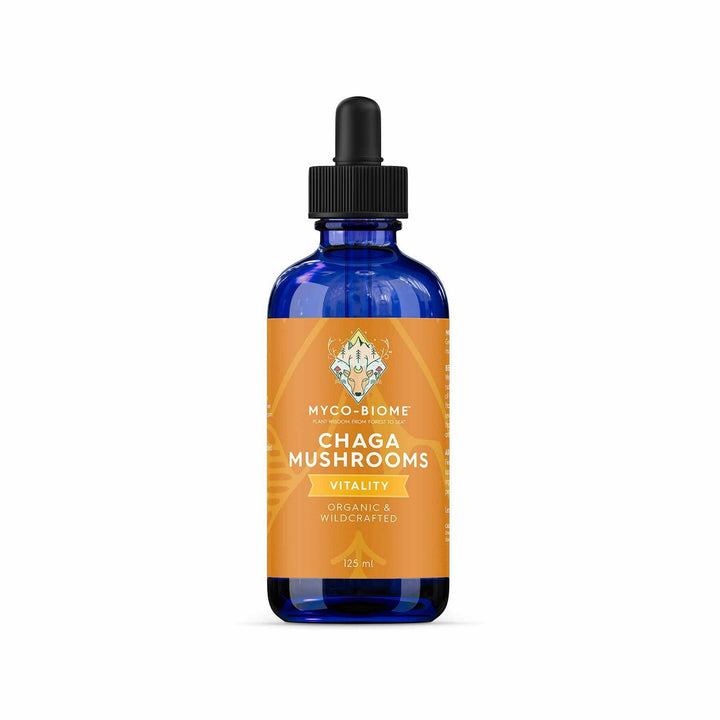
If the answer came back benign
Chaga Mushrooms, Liquid Triple Extract
A different question to the one above. This is for the dog whose lump turned out to be a wart, a papilloma or a benign skin bump, where the goal is antioxidant support and daily resilience rather than immune support alongside a cancer plan.
- Certified organic, ethically wildcrafted, fruiting body only
- Triple extracted, so it is not a raw powder in a bottle
- 1 drop equals 10 mg for body weight dosing
- The label carries the oxalate warning in plain sight, which is how it should be
Will a mushroom supplement shrink my dog's lipoma?
Nobody can promise you that, in either direction, and I am not going to pretend otherwise.
Lipomas are benign fatty masses and they are common. In a study of more than 384,000 dogs under primary veterinary care in the UK, around one in fifty carried a lipoma record, with Weimaraners, Dobermanns, German Pointers, Springer Spaniels and Labradors over-represented. They sit under the skin, move freely, and usually grow slowly over months or years.
Here is what we actually have. Search the veterinary literature for a trial of any mushroom extract on canine lipomas and you will find nothing. Not a weak result. Nothing. That is an absence of evidence, which is not the same thing as evidence that it does nothing, and I want to be careful with that difference because most articles are not.
What fills the gap is anecdote. Pet parents do write to us about bumps that softened or shrank after months on chaga, and those stories matter to the people living them. They are also unmeasured, they have no comparison group, and lumps change size on their own for reasons nobody tracked. One dog's experience is a reason to be curious. It is not a reason to expect the same outcome in your dog.
There is also the mechanism question, which almost nobody explains. A lipoma is a growth of fat cells. What mushroom extracts are understood to do is nudge immune cells, and fat cells are not where that biology points. That is not proof of anything either way. It is the reason I will tell you it may support your dog's overall resilience, and will not tell you it will shrink the lump on his ribcage.
What is worth doing with a lipoma is dull and effective. Keep your dog lean, because extra body fat gives a lipoma more to work with. Measure it with a soft tape or photograph it beside a coin every month so you have a record rather than an impression. Ask for a repeat sample if it changes character. And talk to your vet about removal if it sits in an armpit or a groin where it interferes with movement, because that is the one situation where waiting costs comfort.
How do you tell a real mushroom extract from an expensive powder?
This is where most money is wasted, and it has nothing to do with which mushroom you picked. A product can name the right species and still deliver almost none of the compound you are paying for.
| Check this | Why it matters | What a weak label says |
|---|---|---|
| Beta-glucan figure | Beta-glucans are the active fraction. Starch is also a polysaccharide, so a total polysaccharide number can be mostly grain | "Polysaccharides 30 percent or more" with no beta-glucan figure anywhere |
| Fruiting body | Mycelium is usually grown on rice or oats and sold with the grain still in it | "Mycelial biomass", "full spectrum", "whole food mushroom" |
| Extraction method | Hot water releases beta-glucans, alcohol releases triterpenes. Dogs cannot break down fungal cell walls unaided | "Raw mushroom powder" with no extraction named |
| Latin name | DNA testing of retail mushroom products has found the species inside does not always match the species on the label | A common name only, or a blend with no species list |
| Amount per serving | You cannot dose by body weight if the milligrams per millilitre are not stated | "Proprietary blend", or drops with no weight given |
| Batch testing | Wild-harvested fungi concentrate what is in their environment, so heavy metal screening is not optional | No certificate of analysis available on request |
One number cuts through all of it. If a brand will not print a beta-glucan percentage, assume there is a reason. Everything else on a mushroom label is easier to write than it is to earn.
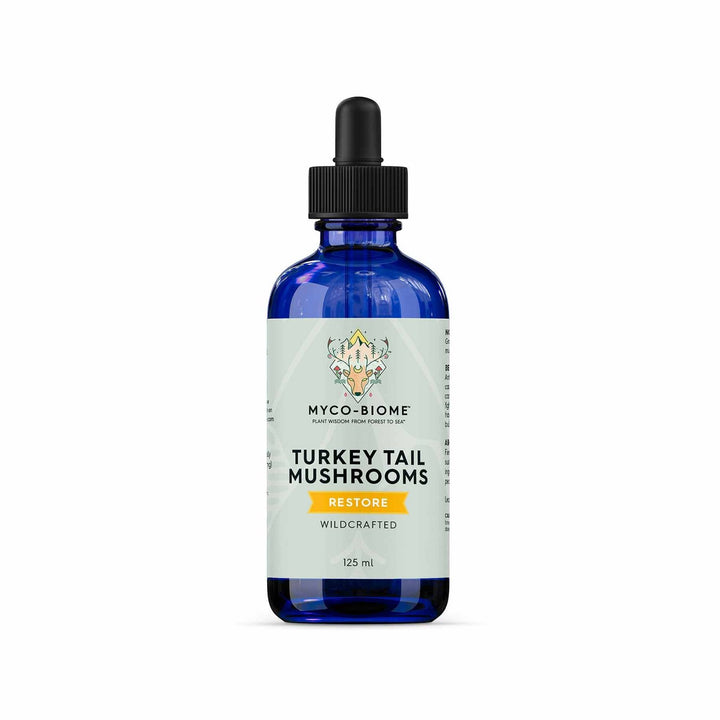
The one that meets the checklist
Turkey Tail Mushrooms, Liquid Triple Extract
I stock this one because it answers every row of the table above without me having to email anyone. Triple extraction means hot water first, then organic alcohol, then glycerin, so both the beta-glucans and the triterpenes come across into the bottle instead of staying locked inside cell walls your dog cannot break down.
- Fruiting body only, never mycelium grown on rice or oats
- Ethically wildcrafted in North American forests, not grown in a lab
- 1 drop equals 10 mg, so you can dose by body weight rather than by guesswork
- Zero synthetics, fillers or additives
What else supports a dog with a lump, besides mushrooms?
Mushrooms are one lever, and honestly not the biggest one you control.
Omega-3 fats have the strongest diet evidence in canine oncology. In a double-blind randomized trial published in 2000, dogs with lymphoma on chemotherapy were fed a diet rich in fish oil and arginine. Dogs with higher blood levels of DHA had a longer disease-free interval and longer survival. Worth knowing: both diets in that trial were already low in simple carbohydrates, so it tested the fats, not carbohydrate restriction on its own. The low-carbohydrate fresh diet that many holistic vets recommend has a sound rationale behind it, and I feed that way myself, but the honest statement is that the canine evidence sits with the omega-3s.
Keep your dog lean. It costs nothing, it is entirely in your hands, and it changes more about how an aging body copes than any supplement in my store.
Support the organs doing the clearing. If your dog is on medication, the liver is working harder than usual. Gentle ongoing liver and gut support is where I would spend attention before adding a fourth or fifth new thing.
For the skin over the lump, a topical earns its place. This is not a mushroom and it will not change what the lump is, so let me be precise about the job it does. REMEDY is a full-spectrum hemp salve with coconut oil, arnica, eucalyptus and peppermint, made for the surface: the bump your dog keeps worrying at, a wart, an area of skin gone red and angry from licking. Massage a small amount in two or three times a day, then give your dog something to do for a few minutes so it absorbs instead of coming straight back off on a tongue. Two rules go with it. Never put it on broken skin or an open wound, because the peppermint oil will sting. And never start applying anything to a mass that has not been sampled, because rubbing at a mast cell tumor can set off a histamine release you would rather avoid.
Pet parents often run it alongside HEAL, the full-spectrum hemp oil, which works from the inside on comfort and recovery rather than on the skin. One caution worth taking seriously: hemp can interact with some medications, so if your dog is on chemotherapy, steroids or seizure medication, ask your vet before the first dose. That is an interaction question, and your vet is the right person to answer it.
If you want the whole daily routine written out in one place, our free Holistic Pet Wellness Blueprint covers what goes in the bowl, in what order, and why.
Find a vet who will engage with the specifics. An integrative or holistic vet can look at your dog's bloodwork and the plan you are already following and tell you what fits around it. That is worth more than any article, including this one. If you want a second pair of eyes on what you are considering, our team answers these questions every day and you can ask us about your dog's situation directly.
Milka, my French Bulldog, is a healthy senior now. Mushrooms rotate through her bowl because she is eleven and I would like many more good years, not because anything is wrong. That is a proactive routine, and it is a very different thing from what you are doing right now, which is responding to something specific. Do not let anyone blur those two situations together to sell you a subscription.
When should you stop watching and call your vet?
Monitoring is reasonable once a lump has been sampled and identified. Before that, watching is not a plan. Call your vet promptly for any of these:
- Any new lump you have not had checked, whatever its size. Small masses are easier to sample and easier to remove cleanly.
- A lump that changes size, shape or firmness, especially one that grows noticeably within a few weeks.
- A lump that becomes red, swollen or itchy after being handled, which can happen with mast cell tumors.
- A lump that is ulcerated, bleeding, or that your dog will not leave alone.
- A firm mass that feels stuck to the tissue underneath rather than moving freely.
- Any lump alongside appetite loss, weight loss, lethargy, lameness or pale gums. That combination needs same-day attention.
And here is the practical version of monitoring, once your vet has told you what you are dealing with. Photograph the lump next to a coin for scale. Measure it across the widest point with a soft tape. Note the date. Repeat monthly in the same conditions. When you walk in with four dated photographs instead of a feeling that it might be bigger, the conversation changes completely.
You are not powerless here, and you are not behind. Find out what the lump is first. Then choose the support that matches the answer, from a bottle that tells you what is in it.
Much love, Larry
Sources
- Davies Veterinary Specialists. Canine Cutaneous Mast Cell Tumours Fact Sheet. vetspecialists.co.uk
- Liptak J. A Practical Approach to Lumps and Bumps. WSAVA World Congress Proceedings, 2017, via the Veterinary Information Network.
- Thamm D. Mast Cell Tumors in Dogs. WSAVA World Congress Proceedings, 2016, via the Veterinary Information Network.
- O'Neill DG et al. Lipoma in dogs under primary veterinary care in the UK: prevalence and breed associations. Canine Genetics and Epidemiology, 2018. PMC6161450
- Brown DC, Reetz J. Single agent polysaccharopeptide delays metastases and improves survival in naturally occurring hemangiosarcoma. Evidence-Based Complementary and Alternative Medicine, 2012, article 384301. PubMed 22988473
- Gedney A et al. Evaluation of the anti-tumour activity of Coriolus versicolor polysaccharopeptide alone or in combination with doxorubicin for canine splenic hemangiosarcoma. Veterinary and Comparative Oncology, 2022, volume 20, pages 688 to 696. PubMed 35442554
- Zhong L et al. Coriolus versicolor and Ganoderma lucidum related natural products as an adjunct therapy for cancers: a systematic review and meta-analysis of randomized controlled trials. Frontiers in Pharmacology, 2019. PMC6616310
- Memorial Sloan Kettering Cancer Center. Coriolus versicolor, About Herbs monograph. mskcc.org
- Lee S et al. Development of end stage renal disease after long-term ingestion of chaga mushroom: case report and review of literature. Journal of Korean Medical Science, 2020, volume 35, article e122.
- Kwon O et al. Chaga mushroom-induced oxalate nephropathy that clinically manifested as nephrotic syndrome: a case report. Medicine, 2022. PMC8913114
- Raja HA, Baker TR, Little JG, Oberlies NH. DNA barcoding for identification of consumer-relevant mushrooms: a partial solution for product certification? Food Chemistry, 2017, volume 214, pages 383 to 392.
- Kataoka H et al. Innate immunity induced by fungal beta-glucans via dectin-1 signaling pathway. International Journal of Medicinal Mushrooms, 2014. PubMed 24940900
- Ogilvie GK et al. Effect of fish oil, arginine, and doxorubicin chemotherapy on remission and survival time for dogs with lymphoma: a double-blind, randomized placebo-controlled study. Cancer, 2000, volume 88, pages 1916 to 1928. PubMed 10760770