Chaga vs turkey tail for dogs comes down to one question: what are you supporting? Turkey tail is the better-researched of the two in dogs, with actual canine clinical-trial data behind it and a measured prebiotic effect on the gut. Chaga is the antioxidant one, reached for when a pet parent is thinking about oxidative stress, cellular resilience and coat quality as a dog gets older. Neither one is medication. And for a healthy dog with nothing specific going on, most pet parents get more out of rotating the two than out of picking a winner.
Here is the line to hold onto: turkey tail is the one with the research, chaga is the one with the antioxidants, and a healthy dog is usually better served by rotating them than by choosing between them.
On this page
- Chaga vs turkey tail for dogs: what is the real difference?
- Which mushroom has the better research in dogs?
- Which dog needs turkey tail, and which needs chaga?
- Can you give chaga and turkey tail together?
- How do you rotate them, and for how long?
- Which dogs should not take chaga?
- Does the extraction method change what your dog gets?
- How much do you give?
- Sources
You already know mushrooms belong in the bowl. That is not the question you came with. The question is which bottle, and whether you are wasting money buying the wrong one.
So let me give you the honest version, including the parts that do not flatter either mushroom.
Chaga vs turkey tail for dogs: what is the real difference?
They are not variations on the same thing. They are different organisms, growing in different places, carrying different active compounds, and they were traditionally used for different reasons.
Turkey tail is a fan-shaped bracket fungus that grows in overlapping tiers on dead hardwood. Its headline compounds are two protein-bound polysaccharides, PSP and PSK, which are the most studied immune-active compounds in the entire medicinal mushroom world.
Chaga is stranger. It is not really a mushroom in the way we picture one. It is a hardened mass that grows on birch trees in cold northern forests and looks like a lump of burnt charcoal. Its defining compound is melanin, the same black pigment family that gives it its color, alongside polyphenols and birch-derived triterpenes.
Scroll sideways to see the full table.
| Chaga | Turkey tail | |
|---|---|---|
| Species | Inonotus obliquus | Trametes versicolor |
| Where it grows | Birch trees, cold northern forests | Dead hardwood, worldwide |
| Key compounds | Melanin, polyphenols, triterpenes | PSP, PSK, beta-glucans |
| Traditional use | Siberian and Nordic folk tonic | Yun zhi, used in China for centuries |
| Caution on the label | High in oxalates, no stone history | No oxalate caution on this label |
That last row is the one most comparison articles leave out entirely, and it is the single most practical line in the table. More on it below.
Which mushroom has the better research in dogs?
Turkey tail. Not close. And here is what the research actually tells us, including the follow-up study that almost nobody writing about this mentions.
In 2012, a team at the University of Pennsylvania School of Veterinary Medicine ran a small randomized, double-blind study in 15 dogs with splenic hemangiosarcoma, an aggressive blood-vessel cancer. The dogs were split into three groups of five and given a standardized turkey tail PSP extract at 25, 50, or 100 mg per kilogram daily, with no other therapy alongside it. The highest-dose group had a median survival of 199 days, which the authors reported as the longest survival times then recorded in canine hemangiosarcoma, and the spread of secondary tumors was significantly slower than in the low-dose group (1).
That study is why turkey tail is in your search results at all. It is a genuinely important piece of veterinary research. It was also five dogs per group, with no placebo arm, and the authors described it as a pilot.
Then, in 2022, a larger study published in Veterinary and Comparative Oncology looked at the same PSP extract in dogs with splenic hemangiosarcoma after spleen removal, on its own and alongside doxorubicin. Adding PSP to the conventional protocol did not improve survival. In one subgroup, female dogs given PSP alone did worse than females on doxorubicin (2).
I am telling you that because you deserve the whole picture, and because any page that quotes the 199 days without the 2022 follow-up is selling you something. Two studies, pointing in different directions, in one specific cancer, at research doses far above what any daily wellness label suggests. That is the honest state of the evidence.
Where turkey tail's evidence is much tidier is the gut. A randomized clinical trial published in Gut Microbes in 2014 gave PSP from turkey tail to healthy adult volunteers and found consistent shifts in the gut microbiome, with the authors concluding that PSP behaves as a prebiotic (3). An earlier laboratory study on human fecal cultures found PSP raised Bifidobacterium and Lactobacillus levels while lowering Clostridium (4). That is the mechanism behind the gut claim, and it holds up.
Chaga has no canine clinical trial at all. The closest dog-specific work is a 2023 laboratory study in which chaga extract reduced the viability of canine bladder cancer organoids in a dose-dependent way (5). Organoids are cells in a dish, not dogs in a clinic, and that distinction matters. What chaga does have is a deep bench of laboratory, rodent, and human work on antioxidant and immune-regulating activity, driven by its melanin, polyphenols, and triterpenes (6, 7).
So: turkey tail is the one with clinical data in dogs, and that data is mixed. Chaga is the one with strong mechanistic data and no clinical data in dogs. Both are support, not medicine. Anyone telling you otherwise has not read the papers.
Which dog needs turkey tail, and which needs chaga?
Here is how I would think it through for the dog in front of you.
Start with turkey tail if your main concern is immune resilience, gut balance, or a dog coming off antibiotics with a microbiome that never quite recovered. It is also the sensible first choice for any dog with a history of urinary or kidney stones, because of the chaga caution below.
Start with chaga if your concern is the slow stuff: oxidative load, a coat that has lost its shine, a dog in their senior years where you are thinking about cellular wear rather than any one symptom.
If your vet has named a condition, the first question is never which mushroom. It is whether anything you add works alongside the plan your vet has already built. Ask them before you start, take the research with you, and keep the mushroom as support running beside the veterinary care rather than instead of it. That is not a disclaimer; it is the actual order of operations.
And if your dog is healthy, nothing is wrong, and you want one bottle to begin with while you learn how your dog responds, start with turkey tail. It is the one with the clinical research in dogs, it carries no oxalate caution, and it is the easier of the two to build a routine around.
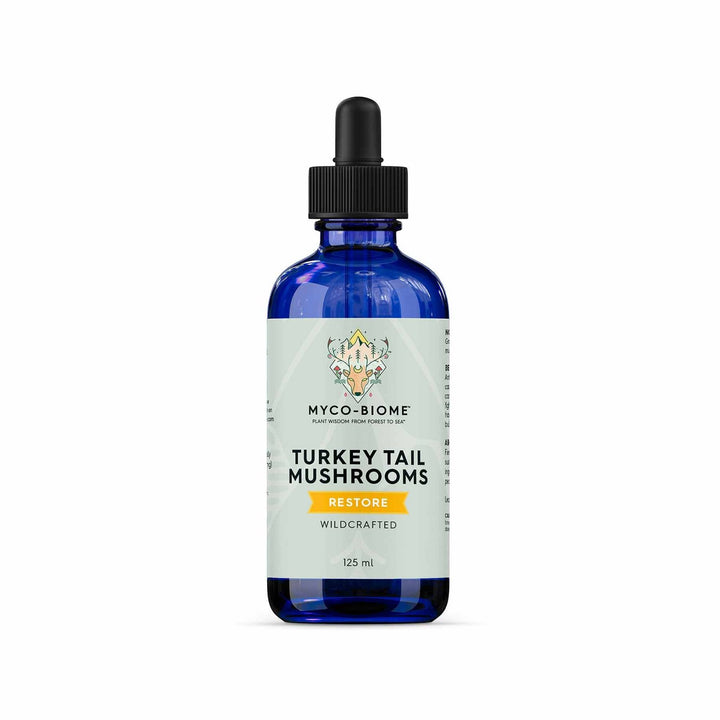
The one I reach for first
Turkey Tail Mushrooms | Liquid Triple Extract
Most turkey tail on the market is a powder, and a powder leaves the alcohol-soluble compounds locked in the cell wall. This one is triple extracted, so you get both halves of the mushroom, and it is fruiting body only, which is the part all of that research was done on.
- Triple extracted in hot water, organic alcohol, and glycerin, with 0% alcohol left and every batch tested
- Fruiting body only, never mycelium grown on rice or oats
- Wildcrafted in a private Maritime Canada forest or foraged in British Columbia
- 1 drop is about 10 mg, dosed at 1 drop per pound of bodyweight daily
- 125 ml, for dogs and cats, no synthetics, fillers or additives
Can you give chaga and turkey tail together?
Yes, and plenty of pet parents do. They are not competing for the same receptor, and they are not working against each other. Chaga brings the antioxidant load, turkey tail brings the beta-glucans and the prebiotic effect, and between them you cover more ground than either does alone.
One rule if you are going to run both: add them one at a time, about two weeks apart. If something does not agree with your dog, you want to know which bottle it was. Starting two new things on the same Monday tells you nothing.
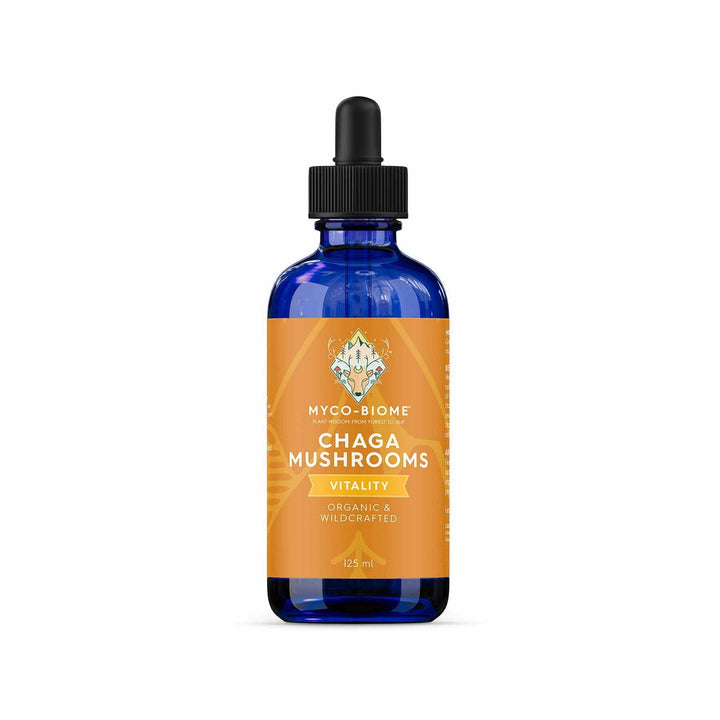
The one I add second
Chaga Mushrooms | Liquid Triple Extract
Chaga is where the antioxidant side of the routine comes from, and the compounds that carry it are not all water-soluble. This is the same triple extraction and the same forest as the turkey tail, so the two sit together in a rotation without you having to learn a second brand's label.
- Triple extracted in hot water, organic alcohol, and glycerin, with 0% alcohol left and every batch tested
- Fruiting body only, certified organic by Ecocert
- Ethically wildcrafted on North American trees, outdoors, not grown in a lab
- 1 drop is about 10 mg, dosed at 1 drop per pound of bodyweight daily
- 125 ml, for dogs and cats, no synthetics, fillers or additives
On the label: chaga is high in oxalates, so it is not recommended for pets with a history of urinary or kidney stones.
See Chaga Liquid Triple ExtractHow do you rotate them, and for how long?
This is the part the comparison articles skip, and it is the part that actually changes outcomes.
For a healthy dog, the thinking we follow is that variety beats repetition. Rather than giving one mushroom every day forever, you finish a bottle, move to the next one, and come back around. Your dog gets a wider range of compounds across the year instead of the same narrow set every morning. For a dog you are actively supporting through something, the opposite applies: give it consistently for a minimum of six weeks before you form any opinion, because that is roughly how long the body needs to show you anything.
Here is a simple year, if you want something concrete to copy.
Scroll sideways to see the full table.
| When | What you give | Why this one now |
|---|---|---|
| Months 1 to 2 | Turkey tail | Immune and gut base, the easiest start |
| Months 3 to 4 | Chaga | Antioxidant load, coat and cellular wear |
| Months 5 to 6 | Both together, one added at a time | Widest coverage, see how your dog does |
| Months 7 to 8 | A third mushroom, reishi or lion's mane | Different compounds, calm or cognition |
| Months 9 to 10 | Turkey tail again | Back to the base through colder months |
| Months 11 to 12 | Chaga, or a rest | A gap is a legitimate choice, not a failure |
Use it as a shape, not a prescription. A dog with a stone history skips the chaga months entirely and rotates turkey tail with something else. A dog your vet is already supporting stays on whatever you agreed with them, consistently, rather than rotating around it.
If you are building a daily routine from scratch rather than adding one bottle to it, this free guide is where I would start. It covers what belongs in a daily routine at each life stage, and more usefully, what does not.
Which dogs should not take chaga?
Chaga is very high in oxalates. That is not a marketing caveat, it is on the bottle, and it is the reason chaga is not a universal recommendation the way turkey tail more or less is.
In human medicine, there are published case reports linking long-term, high-dose chaga powder to serious kidney injury. In one case reported in the Journal of Korean Medical Science in 2020, researchers connected prolonged chaga intake to kidney failure, measured the oxalate content of the powder involved at roughly 14 grams per 100 grams, and proposed chaga as an emerging risk factor for chronic kidney disease (8). A separate 2022 case in Medicine described acute oxalate kidney injury in a man taking 10 to 15 grams of chaga powder daily (9).
Those were people swallowing grams of powder a day, not dogs taking drops of an extract. The scale is completely different and I am not going to pretend otherwise. But oxalate is oxalate; the kidneys are the only organ that clears it, and for a dog whose kidneys or bladder have already shown you a problem, there is no reason to find out.
Skip chaga, and talk to a holistic or integrative vet first, if your dog:
- has any history of kidney stones, bladder stones or urinary crystals
- is on blood-thinning or anticoagulant medication
- is on medication affecting blood sugar
- is on an immunosuppressant, since an immune modulator pulls the other way
For any of those dogs, turkey tail is the straightforward alternative. There is no oxalate caution on that label. That is not a green light either, so still run it past your vet if your dog has an ongoing condition.
We go much deeper into this in our full guide to chaga mushroom for dogs, including the dosing table by bodyweight.
Does the extraction method change what your dog gets?
More than the species does, honestly. You can buy a technically correct turkey tail product that delivers almost nothing.
Two things decide it.
First, how it was extracted. Beta-glucans are water-soluble and need hot water to come out of the fungal cell wall. Triterpenes and sterols are not water-soluble and need alcohol. A product extracted only one way gives you half the mushroom. That is what dual and triple extraction means on a label: hot water for the polysaccharides, then organic alcohol for the triterpenes, and in a triple extract, a third glycerin stage. Raw dried powder has had neither done to it, so much of the active material stays locked behind a cell wall your dog cannot break down.
Second, which part of the fungus is in the bottle? A large share of the mushroom supplement market is mycelium grown on a bed of rice or oats, then dried and milled with the grain still in it. What you are buying by weight is substantially starch. Every piece of research quoted on these pages, chaga and turkey tail alike, was done on the fruiting body.
If that sounds like a small quibble, consider what happened when researchers actually checked. A 2023 analysis published in Nutrients took 19 mushroom supplements from six companies on the Italian market and ran molecular identification on them. Six of the 19 contained the species named on the label. The authors also found glucan content varying between capsules from the same batch, and contaminants above permitted levels in some samples (10).
So when you are comparing chaga against turkey tail, you are also, unavoidably, comparing one company's sourcing against another's. Look for the species named in Latin, the words fruiting body, a stated extraction method, and a brand willing to tell you which forest it came out of.
How much do you give?
Follow the label on the bottle in your hand, because concentration varies enormously between products. As a real reference point, both the chaga and the turkey tail liquid triple extracts we stock are labelled the same way:
- Start below the full serving for the first few days and watch how your dog responds. Loose stool is the usual sign of too much, too fast.
- Dose by bodyweight. One drop per pound of bodyweight daily, where one drop is about 10 mg. A 40 lb dog gets 40 drops, or about 400 mg.
- Give it with food, straight into the meal. Most dogs do not notice.
- Build up over a week to the full serving, then keep it consistent. These work as a habit, not as a one-off.
- Give it six weeks before you decide whether it is doing anything.
If you are using a multi-mushroom blend rather than a single extract, follow that product's own instructions instead, because the maths above will not transfer.
You can see everything we stock in the medicinal mushrooms collection, and if you want the deeper read on either one, we have written a full post on what the research shows on turkey tail mushrooms for dogs. If what brought you here was a lump you found on your dog, read our honest guide to mushroom supplements and dog lumps first, and call your vet.
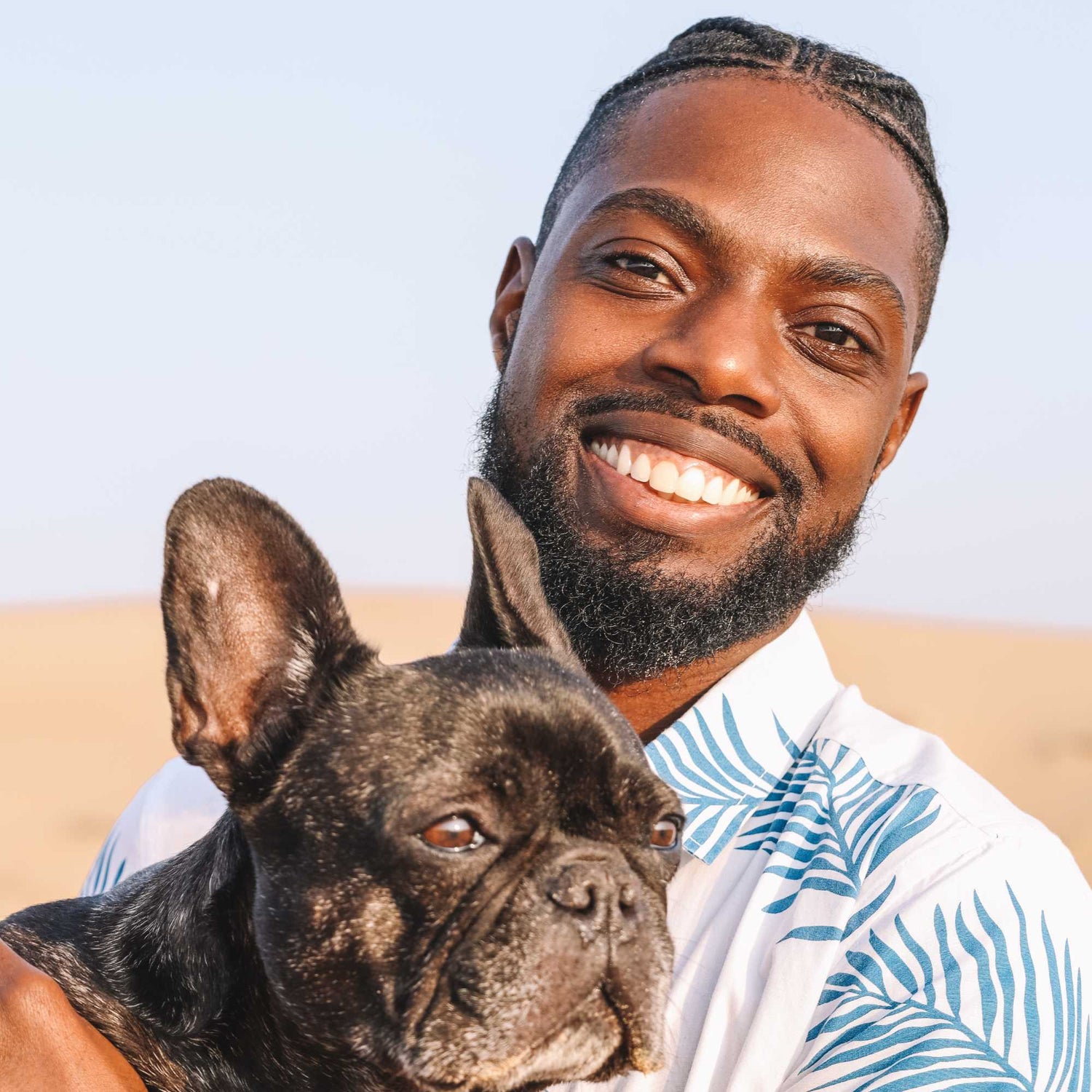
Milka is now eleven, with a snout that is more white than black, and mushrooms have been part of her bowl for years. Not because I think a dropper of anything is going to stop time. Because supporting the systems that do the work, every day, quietly, for years, is the only version of this that has ever made sense to me.
You are not choosing between two miracle bottles. You are choosing which part of your dog's body you want to support first. That is a much easier question, and you already know the answer.
The short version, if you are deciding now
Scroll sideways to see the full table.
| Turkey tail | Chaga | |
|---|---|---|
| Buy it for | Immune resilience and gut balance | Antioxidant load, coat, healthy aging |
| What sets it apart | PSP and PSK, plus a prebiotic effect | Melanin and birch-derived triterpenes |
| Evidence status | Two canine trials, results conflict | Lab and rodent work, no canine trial |
| Skip it if | Your vet has advised against it | Any kidney or bladder stone history |
| Go and look | Turkey Tail Triple Extract | Chaga Triple Extract |
Sources
- Brown DC, Reetz J. "Single Agent Polysaccharopeptide Delays Metastases and Improves Survival in Naturally Occurring Hemangiosarcoma." Evidence-Based Complementary and Alternative Medicine, 2012. PMC3440946
- Gedney A, et al. "Evaluation of the anti-tumour activity of Coriolus versicolor polysaccharopeptide (I'm-Yunity) alone or in combination with doxorubicin for canine splenic hemangiosarcoma." Veterinary and Comparative Oncology, 2022. PubMed 35442554
- Pallav K, et al. "Effects of polysaccharopeptide from Trametes versicolor and amoxicillin on the gut microbiome of healthy volunteers: a randomized clinical trial." Gut Microbes, 2014. PubMed 25006989
- Yu Z-T, et al. "Trametes versicolor extract modifies human fecal microbiota composition in vitro." Plant Foods for Human Nutrition, 2013. PubMed 23435630
- "Anti-cancer activity of Chaga mushroom (Inonotus obliquus) against dog bladder cancer organoids." Frontiers in Pharmacology, 2023. PMC10154587
- "Natural Products and Health Care Functions of Inonotus obliquus." Nutrients, 2025. PMC12026145
- "A brief overview of the medicinal and nutraceutical importance of Inonotus obliquus (chaga) mushrooms." Heliyon, 2024. PMC11336990
- "Development of End Stage Renal Disease after Long-Term Ingestion of Chaga Mushroom: Case Report and Review of Literature." Journal of Korean Medical Science, 2020. PMC7234858
- "Chaga mushroom-induced oxalate nephropathy that clinically manifested as nephrotic syndrome: A case report." Medicine, 2022. PMC8913114
- Risoli S, et al. "Mushroom-Based Supplements in Italy: Let's Open Pandora's Box." Nutrients, 2023. PubMed 36771482
Disclaimer: I am not a veterinarian and this is not medical advice. Every pet is unique, so I always recommend working alongside your vet, ideally a holistic or integrative vet, especially for anything ongoing or serious.