Chlorella for dogs is a nutrient-dense freshwater green algae that may support your dog through gentle, gut-level detox, immune balance, and everyday nutrition. Here is the honest version most articles skip: chlorella works mainly by binding metals and other toxins inside the digestive tract so they leave in the stool. It does not scrub stored toxins out of your dog's organs. That makes it a supportive, whole-body tool, not a fix. And it suits some dogs far more than others: dogs with real environmental or dietary toxin exposure, seniors, hard-working active dogs, and dogs coming off heavily processed food.
The one-line version worth remembering: chlorella for dogs binds toxins in the gut to help carry them out, not a cleanse that pulls toxins from the organs.
On this page
- What is chlorella, and what is actually in it?
- What are the benefits of chlorella for dogs?
- Does chlorella really detox heavy metals in dogs?
- What kind of dog is chlorella best for?
- How much chlorella can I give my dog?
- Chlorella vs spirulina for dogs: which is better?
- Is chlorella safe for dogs, and how do I choose a good one?
- Where chlorella fits in a whole-body approach
- Feed the gut or add the algae: which fits your dog?
- Sources
Let's be real for a second. The internet has decided chlorella is a miracle. "The strongest detoxifier on the planet." "Pulls heavy metals straight out of the body." I understand why that lands. When Milka was a puppy, I would have tried almost anything. Her gut was a mess. Chronic tummy troubles. Itchy hot spots. Vomiting we could set our clocks by. Countless vet visits. "Premium" kibble. Nothing held. What actually turned things around for her was food and terrain, not one green powder. That is exactly the lens I want you to bring to chlorella. Not as a hero. As one supportive tool, for the right dog, used the right way.
What is chlorella, and what is actually in it?
Chlorella is a single-celled freshwater green algae that has been eaten as a food supplement for decades. Researchers consistently describe it as a complete protein containing all the essential amino acids, alongside chlorophyll (the pigment that gives it its deep green color), carotenoids, fiber, B vitamins, and a range of minerals.
One practical detail matters more than the marketing: chlorella has a tough cell wall that the body cannot break down well on its own. That is why quality products are labeled "broken cell wall" or "cracked cell wall." Without that processing, much of what you are feeding passes straight through.
What are the benefits of chlorella for dogs?
Here is what the research tells us, framed honestly, because most of it comes from human and rodent studies rather than dogs.
Whole-food nutrition. Chlorella is genuinely nutrient-dense. For a dog moving off long-term processed food, a small amount of a real, green whole food can add nutrients that a bag of kibble may be missing.
Gut support. Chlorella's fiber and polysaccharides act as a prebiotic, feeding the beneficial bacteria your dog already has. In a human cholesterol trial, chlorella limited how much dietary cholesterol was absorbed in the intestine and increased what left in the stool, which tells us its main action happens in the gut rather than deep in the body.
Immune balance. In an 8-week randomized, double-blind, placebo-controlled trial in healthy adults, 5 grams of chlorella per day was associated with higher natural killer cell activity and increased interferon-gamma compared to placebo. That is promising, but it was a human study, and the authors were careful to say it should not be stretched to unwell populations. For dogs, read it as a reasonable signal, not proof.
Antioxidant support. The chlorophyll and carotenoids in chlorella have antioxidant properties. This is where a lot of "anti-aging" language comes from. The nutrients are real. The dramatic claims are ahead of the canine evidence.
Does chlorella really detox heavy metals in dogs?
This is the claim chlorella is famous for, and it is the one most often exaggerated. Here is the accurate mechanism.
Chlorella binds metals and toxins inside the digestive tract, which reduces how much gets absorbed and speeds up what leaves in the stool. In mice given methylmercury, adding chlorella powder roughly doubled the mercury cleared through feces and urine. A longer mouse study found blood mercury dropped within a week, and kidney and brain levels fell over three weeks, though liver levels did not change significantly. Laboratory work confirms chlorella physically adsorbs mercury in simulated stomach and intestinal fluid.
It is not only metals. A 2025 study found chlorella bound more than 80 percent of deoxynivalenol and about 40 percent of ochratoxin A, two mycotoxins, and lowered their levels in the body. That matters for dogs, because mycotoxin contamination is a real and documented concern in some commercial pet foods.
So what does this mean for you? Chlorella may help reduce the ongoing, low-level toxin load a dog picks up from food, water, and the environment. What it does not do is pull heavy metals out of organs where they are already stored. If a dog has confirmed heavy metal toxicity, that is worth working through with your veterinarian, ideally a holistic or integrative one, and it is exactly the kind of case to speak with them about whether chlorella fits as part of a broader supportive plan. Chlorella works at the gut level, quietly and over time, so think of it as steady support rather than a quick fix.
Because the gut is where chlorella actually does its work, the gut is where it makes sense to use it. That is worth knowing if you have been looking for a chlorella powder to buy, because chlorella also shows up as a functional ingredient inside gut formulas, where it is working as a prebiotic rather than as a detox dose.
The chlorella we actually stock
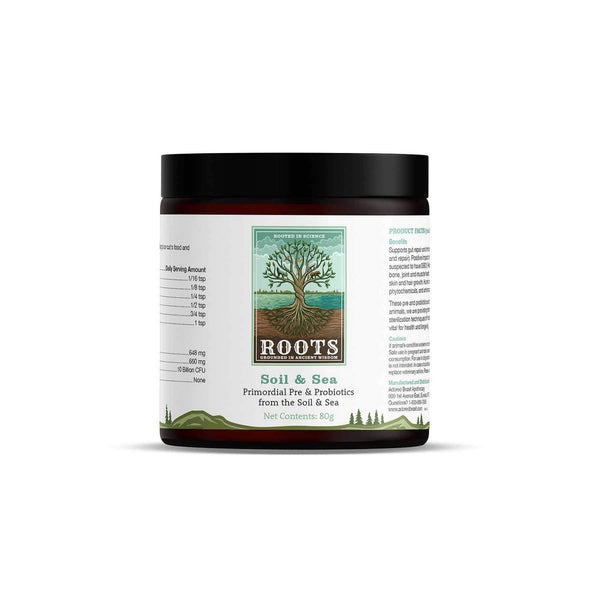
Soil & Sea, Primordial Pre & Probiotics
Adored Beast · Prebiotic chlorella, humic and fulvic acid, soil-based probiotics · Rated 5.0
I want to be precise about why this one is here. Soil & Sea is not a high-dose chlorella powder, and it is not sold as a detox product. It is a gut formula that uses chlorella as its prebiotic, which is the same role the research in this article describes: feeding the beneficial bacteria your dog already has. If you came looking for chlorella because you want gut-first support rather than a cleanse, this is the honest version of that.
What is in every 1/2 teaspoon
- 648 mg prebiotic chlorella. A prehistoric strain, included to support the viability of the probiotics alongside it.
- 650 mg ancient humic and fulvic acid. The mineral side of the formula.
- 10 billion CFU soil-derived Bacillus probiotics. Spore-forming strains from primordial organic soil, so they stay intact until they reach the lower intestine.
- Nothing else. Zero synthetics, zero fillers, zero additives, no maltodextrin and no flour.
Daily amount, mixed into food
| Your pet's weight | Once per day |
|---|---|
| 1 to 5 lbs | 1/16 tsp |
| 6 to 15 lbs | 1/8 tsp |
| 16 to 39 lbs | 1/4 tsp |
| 40 to 59 lbs | 1/2 tsp |
| 60 to 89 lbs | 3/4 tsp |
| 90 lbs and up | 1 tsp |
Give the full amount once a day, mixed into food, and refrigerate after opening. Adored Beast suggests a minimum of 6 weeks when you are working on something specific, because the body needs time to respond. As always, loop in your vet, ideally a holistic or integrative one, before adding anything new.
Available on Subscribe & Save. Set it to auto-ship and save 10% on every order.
What kind of dog is chlorella best for?
This is the question worth asking, because chlorella is not a "give it to every dog" supplement. Based on where the evidence is strongest and where the mechanism actually applies, here are the dogs most likely to benefit:
- Dogs with real environmental exposure. City dogs, dogs that drink from puddles, ponds, or older pipes, and dogs that walk on chemically sprayed lawns or near industrial areas carry a higher everyday toxin load.
- Dogs eating fish-heavy or heavily processed diets. Fish can carry methylmercury, and some processed foods carry mycotoxins, exactly the compounds chlorella binds in the gut.
- Dogs transitioning off long-term kibble. As you move a dog toward fresh food, chlorella can add whole-food nutrients and gentle gut support during the change.
- Senior dogs. Chlorella for senior dogs makes sense as antioxidant and nutritional support for an aging body, as long as it is introduced slowly. Milka is a healthy senior now, and my whole approach with her is gentle, consistent, whole-food support rather than anything harsh.
- Active and working dogs. Dogs that train, hunt, herd, or work hard put real demand on their bodies, and a nutrient-dense whole food can support recovery and everyday vitality.
And the dogs who should wait or skip it:
- Dogs on blood-thinning medication, because chlorella contains vitamin K. Check with your vet first.
- Dogs with very sensitive stomachs or a known algae sensitivity. Start with a tiny amount or skip it.
- Any dog with a known health condition or on medication. Loop in your vet before adding anything new.
How much chlorella can I give my dog?
Here is the honest answer on chlorella dosage for dogs: there is no formally studied, established dose, because chlorella has barely been trialed in dogs specifically. So the rule is start low and go slow.
Begin with a pinch of a broken-cell-wall powder mixed into food, watch your dog's stool, appetite, and energy for a few days, and increase gradually over one to two weeks. Commonly suggested starting points range from a pinch for small dogs up to around a teaspoon for large dogs, but read those as conservative starting ideas, not studied doses. If your dog does well, you have your amount. If you see loose stool or an upset tummy, ease back. Because every dog is different, this is a great thing to talk through with your vet, ideally a holistic or integrative one.
Chlorella vs spirulina for dogs: which is better?
These two get lumped together, but they are different. Here is the honest comparison.
| Chlorella | Spirulina | |
|---|---|---|
| What it is | Single-celled freshwater green algae, eaten as a food supplement for decades | A different microalgae, most often used as a broad daily nutritional supplement |
| Main action that matters | Binds metals and toxins inside the digestive tract so less is absorbed and more leaves in the stool | Broad daily nutrition and immune support rather than gut-level binding |
| Processing to look for | Must say "broken" or "cracked cell wall", or much of it passes straight through | Cell wall is not the same barrier, so no cracking step to look for |
| Evidence in dogs specifically | Barely trialed in dogs. Most research is human and rodent | More direct canine data, including a 2023 palatability study in healthy dogs and cats |
| Best fit if your goal is | Gentle detox support at the gut level | Broad daily nutrition and immune support |
| Shared quality risk | Both are algae grown in water, so both can pick up what is in that water. A 2025 analysis of 52 commercial spirulina and chlorella supplements found all within regulatory metal limits, but it also detected pharmaceutical residues, and organic labeling did not guarantee a cleaner product | |
The honest verdict: if your goal leans toward gentle detox support, chlorella has the more relevant mechanism. If you want broad daily nutrition and immune support with more direct canine data behind it, spirulina has the edge. Many dogs do perfectly well with either, or a blend. Neither is a magic bullet.
Is chlorella safe for dogs, and how do I choose a good one?
For most healthy dogs, chlorella is well tolerated when introduced slowly. The most common side effect is mild digestive upset, usually from too much too fast.
The bigger safety issue is quality, and this one is worth your attention. The same property that lets chlorella bind toxins in the gut means the algae itself can absorb metals from the water it is grown in. A 2025 analysis of 52 commercial spirulina and chlorella supplements found all of them within regulatory metal limits, but it also detected pharmaceutical residues, and organic labeling did not guarantee a cleaner product. Sourcing and third-party testing matter more than a label.
When you choose a chlorella:
- Look for broken or cracked cell wall, so your dog can actually absorb it.
- Choose a brand that does third-party heavy metal and contaminant testing.
- Favor cleanly cultivated sources over the cheapest option on the shelf.
- Introduce it slowly and watch how your specific dog responds.
If it is the algae whole food you are after
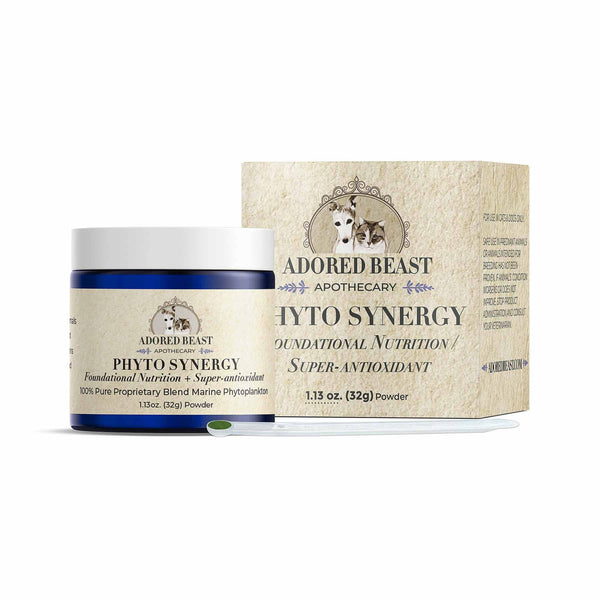
Phyto Synergy, Super Antioxidant
Adored Beast · 100% pure marine phytoplankton · Rated 5.0 from 11 reviews
15g or 32g jar · 1/16 tsp per day, any size dog or cat
If the idea of an algae-based whole food appeals to you, our algae superfood antioxidant Phyto Synergy is a marine phytoplankton option that supports skin, coat, and everyday vitality. It is a different algae from chlorella, not a substitute, but it comes from the same whole-food, less-is-more thinking. It is grown on land with triple-filtered ocean water, so heavy metals and radiation are not the concern they are with most sea greens, which is the exact quality problem worth watching for in any algae you buy.
Also on Subscribe & Save at 10% off every order.
Where chlorella fits in a whole-body approach
Here is what I want you to take away. Chlorella is not the hero of your dog's health story. Your dog's body is. Chlorella, at best, is one gut-first tool that supports the body's own work of clearing what it does not need.
If that thinking appeals to you, gentle, gut-first, whole-body support, that is the same philosophy behind our soil- and sea-based pre and probiotic Soil & Sea. It is not a straight chlorella powder, so I will not pretend otherwise, but chlorella is the prebiotic sitting inside it. It works on the same terrain chlorella lovers care about: feeding a healthy gut, supporting the body's natural detox pathways, and supporting skin, coat, and immunity from the inside out. You can see the rest of what we stock for this in our detox and liver support collection.
You're not powerless here. You are your pet's biggest advocate, and choosing to support the whole body gently, instead of chasing the loudest miracle claim, is exactly the kind of decision that changes things over time. It did for Milka.
Much Love, Larry
Feed the gut or add the algae: which fits your dog?
This post pulls apart two different jobs people expect one green powder to do. Feeding the gut and adding a whole-food antioxidant are not the same job, and they point to two different products. Here is the straight comparison so you can pick one rather than buying both.
| Soil & Sea | Phyto Synergy | |
|---|---|---|
| What it is | Soil-derived probiotics with prebiotic chlorella, humic and fulvic acid | 100% pure marine phytoplankton |
| The algae inside it | Chlorella, 648 mg per 1/2 tsp, working as the prebiotic | Marine phytoplankton, a different algae, working as the antioxidant |
| Its main job | Builds the gut terrain and supports the body's own detox pathways | Whole-food antioxidant nutrition for skin, coat, and everyday vitality |
| Choose it if | You came here for the gut and detox story, or your dog is coming off long-term processed food | You came here for the algae superfood story and want daily whole-food nutrition |
| Daily amount | 1/16 to 1 tsp by weight, once a day | 1/16 tsp, any size dog or cat |
| Price | From $55.99 (40g or 80g) | From $61.99 (15g or 32g) |
| Subscribe & Save | Yes, 10% off every order | Yes, 10% off every order |
| Shop Soil & Sea | Shop Phyto Synergy |
Not sure which one your dog needs? Our Pet Wellness Success Team will talk it through with you, no purchase expected. Bark at us here.
Sources
- Kwak et al. "Beneficial immunostimulatory effect of short-term Chlorella supplementation." Nutrition Journal, 2012. https://www.ncbi.nlm.nih.gov/pmc/articles/PMC3511195/
- Uchikawa et al. "The influence of Parachlorella beyerinckii CK-5 on the absorption and excretion of methylmercury in mice." Journal of Toxicological Sciences, 2010. https://pubmed.ncbi.nlm.nih.gov/20118630/
- Uchikawa et al. "Enhanced elimination of tissue methylmercury in Parachlorella beijerinckii-fed mice." Journal of Toxicological Sciences, 2011. https://pubmed.ncbi.nlm.nih.gov/21297350/
- "Evaluation of mercury adsorption and removal efficacy of pulverized Chlorella vulgaris." Journal of Applied Phycology, 2020. https://link.springer.com/article/10.1007/s10811-020-02052-0
- "Oral Exposure to Chlorella sorokiniana Detoxifies Deoxynivalenol, Ochratoxin A, and Fumonisin B1 In Vitro and In Vivo." Toxins, 2025. https://www.ncbi.nlm.nih.gov/pmc/articles/PMC12300608/
- Kim et al. "A dietary cholesterol challenge study to assess Chlorella supplementation." Nutrition Journal, 2016. https://www.ncbi.nlm.nih.gov/pmc/articles/PMC4866071/
- "Spirulina and Chlorella Dietary Supplements: Are They a Source Solely of Valuable Nutrients?" Molecules, 2025. https://pmc.ncbi.nlm.nih.gov/articles/PMC12609422/
- Marchegiani et al. "Oral Palatability and Owners' Perception of the Effect of Increasing Amounts of Spirulina in Healthy Dogs and Cats." 2023. https://www.ncbi.nlm.nih.gov/pmc/articles/PMC10135035/
- "Proteins from Microalgae: Nutritional, Functional and Bioactive Properties." Foods (MDPI), 2025. https://www.mdpi.com/2304-8158/14/6/921
DISCLAIMER: This content is for informational purposes only and is not intended to be a substitute for professional veterinary advice, diagnosis, or treatment. Every animal's health situation is unique, so always work alongside your vet, ideally a holistic or integrative vet, for anything ongoing or serious. Our content may include affiliate and/or sponsored links, which means your support helps move our mission forward. As content creators, we earn from qualifying purchases.