Benadryl for dogs is one of the most commonly given human medications in the world, and for the reason most pet parents reach for it, chronic itching, the evidence says it mostly does not work. Oral diphenhydramine reaches only about 7.8 percent systemic availability in dogs, and in a 2020 randomized crossover study it failed to reduce allergic skin reactions even when blood levels matched concentrations that are effective in people. It also carries risks that get flattened in both directions online: many products sold under the Benadryl name contain xylitol, decongestants, or acetaminophen, and daily long-term use in dogs has never been studied at all.
Here is the one line to hold onto: the acute risk of Benadryl in dogs is low and well documented, and its long-term risk is neither, because nobody has studied it.
I want to be straight with you about why that distinction matters so much.
When Milka was a puppy, she was itchy. Angry hot spots. Skin she would not leave alone. And like most pet parents, I wanted something I could do that afternoon, not in six weeks. That is the exact moment a bottle of Benadryl looks like an answer.
It is not that reaching for it makes you a bad pet parent. It is that nobody tells you what the research actually found and the better alternatives that also exist.
Can I give my dog Benadryl?
Diphenhydramine is used in dogs every day, in clinics and at home. It is not approved by the FDA for animals, but veterinarians prescribe it off-label routinely, and it has been in use for decades.
So the honest answer is yes, dogs are given Benadryl, and it is generally well tolerated. The dose depends on your dog's weight, health history, and current medications, and that number belongs to your veterinarian rather than to a chart on a blog. Dogs with glaucoma, heart disease, seizure history, or an enlarged prostate, along with pregnant and nursing dogs, need a conversation before anything else.
But "can I" is the wrong question. The better question is the one almost nobody asks.
Does Benadryl actually work for dog allergies?
Here is what the research tells us, and it is more definitive than you would expect.
In 2020, researchers at the University of Georgia and North Carolina State University ran a randomized, double-blinded crossover study on twelve healthy beagles, published in Veterinary Dermatology. Each dog served as its own control. They received either oral diphenhydramine or oral cetirizine twice daily for six days, then had histamine injected into the skin to provoke a measurable allergic reaction.
Cetirizine significantly reduced both the immediate wheal and the delayed late-phase reaction. Diphenhydramine showed no significant difference from baseline. And critically, the dogs on diphenhydramine did reach plasma concentrations considered effective in humans. The drug was in their bloodstream. It did not do the thing.
That finding lines up with the international consensus. The 2015 updated guidelines from the International Committee on Allergic Diseases of Animals, published in BMC Veterinary Research, state plainly that there is no conclusive evidence oral type-1 antihistamines resolve either active or chronic atopic dermatitis lesions in dogs. Where an antihistamine is used at all, those guidelines name cetirizine and hydroxyzine as the better options.
So if you have ever given your dog Benadryl for seasonal itching and quietly wondered whether it did anything at all, you were not imagining it. You were noticing something the research already documented.
Why does Benadryl work for people but not for dogs?
Because most of it never gets in.
A 2019 pilot study in Veterinary Dermatology measured what actually happens after an oral dose. Mean systemic availability of diphenhydramine in dogs was 7.8 percent. Roughly nine tenths (90%) of what you give disappears to first-pass metabolism before it can reach the tissues where histamine is causing trouble.
This is the piece almost no article explains, and it changes how you read every other claim about this drug. Dogs are not small people. They metabolize this molecule differently, and a dose that works beautifully in a human body behaves like a much smaller dose in a canine one.
Does Benadryl calm dogs down for fireworks or car rides?
There is real research on this, and the answer surprises people.
A study published in the Journal of the American Veterinary Medical Association in 2005 compared sedation in 56 dogs given diphenhydramine at three different doses, acepromazine, or plain saline. The dogs given acepromazine scored significantly higher on sedation. The dogs given diphenhydramine scored no differently from the dogs given saline, at any dose, at any timepoint. The authors concluded it produced no clinically meaningful sedation and was not suitable as a sole sedative.
That drowsy, glazed feeling you get from Benadryl is a human experience. Your dog may not be having it. Some dogs go the other direction entirely and become more agitated, which is a poor combination on a thunderstorm night.
If storms, fireworks, travel, or separation are the real issue, that deserves a proper plan, not a leftover antihistamine.
Is Benadryl dangerous for dogs?
The honest answer has two halves, and almost every article you will read gives you only one of them.
One dose is unlikely to hurt your dog. Researchers reviewed 621 dogs with diphenhydramine exposure reported to an animal poison control center between 2008 and 2013, published in JAVMA in 2016. Only 23.5 percent developed any clinical sign at all, the signs were mostly mild and neurologic or cardiovascular, and severity tracked the size of the dose. Fatal poisoning in a dog does exist in the published literature, so it is rare rather than impossible, but acute single-dose toxicity is genuinely uncommon.
Now here is what that study cannot tell you. It is a record of exposures, most of them accidental, captured at the moment they happened. There is no long-term follow-up in it. It says nothing whatsoever about the dog who has been given a tablet every day for two years through allergy season after allergy season, which is how many pet parents actually use this drug.
And that data does not exist. Diphenhydramine has never been through the FDA's approval process for animals. It is prescribed off-label, which is legal and routine, but it means there is no long-term canine safety package sitting behind it and no requirement that anyone ever build one. When people say Benadryl is proven safe for dogs, what is proven is that a dose is usually survivable. That is not the same claim.
Here is what most pet parents are never told: veterinary drug references already list real concerns with ongoing use, and they rarely make it into the conversation at the counter.
- Tolerance develops with chronic use. It works less well the longer you give it, which is worth knowing before you conclude your dog's allergies are worsening.
- It lowers the seizure threshold. Veterinary references specifically flag caution in dogs with epilepsy or any seizure history.
- The anticholinergic load is real. Dry mouth, constipation, urinary retention, and raised pressure inside the eye. Glaucoma, urinary obstruction, and an enlarged prostate are listed as absolute reasons not to use it.
- It blocks the workup. Antihistamines interfere with skin allergy testing for one to two weeks. A dog kept on daily Benadryl cannot be properly assessed until it is stopped.
- Some dogs go the other way. Paradoxical excitation instead of sedation is documented in dogs and more common in cats.
So if you have been uneasy about giving your dog something every day for years with no idea what it is doing long term, that unease is not irrational and it is not anti-medicine. It is a reasonable response to a genuine gap in what has been studied.
I will hold the line in one direction too, because it matters. I cannot tell you that Benadryl causes chronic disease in dogs, because no one has shown that. What I can tell you is that nobody has looked properly, and those are two very different sentences. I would rather hand you the actual state of the evidence than a scary number I cannot stand behind.
Which brings us to the risk that is fully documented, and the one I see catch pet parents most often.
Not All Benadryl Is Created Equal
"Benadryl" is a brand name covering many different formulas. What is in the box matters far more than the dose on the box.
| What is in the product | Why it matters for dogs |
|---|---|
| Diphenhydramine HCl as the only active ingredient | The standard form used in veterinary medicine |
| Pseudoephedrine or phenylephrine (found in "-D" and congestion formulas) | Decongestants that are dangerous to dogs |
| Acetaminophen (found in combination and nighttime formulas) | Toxic to dogs |
| Xylitol, also listed as birch sugar (found in some liquids and chewables) | Highly toxic to dogs, causes a dangerous blood sugar drop |
| Alcohol (found in some liquid formulas) | Avoid |
The single most important habit here: read the full inactive ingredient list, not only the active ingredient. If anything on that label is unfamiliar, photograph it and send it to your vet before it goes anywhere near your dog.
When is Benadryl genuinely the right call?
I am not here to tell you this drug is useless. It is not. It is a poor fit for chronic itching and a reasonable one for a narrow set of acute situations, usually alongside veterinary guidance: an insect sting reaction, hives that appeared suddenly, or supportive care around a known histamine-driven condition.
But there is one scenario where reaching for the bottle is the wrong move, and every pet parent should know it.
Benadryl is not the answer for a severe allergic reaction.
In veterinary emergency medicine, epinephrine is the mainstay of care for anaphylaxis. Antihistamines act far too slowly to help in the initial crisis and serve only as an adjunct afterward. Reaching for Benadryl and waiting to see what happens costs time your dog may not have.
Get to an emergency vet immediately if you see:
- Swelling of the face, muzzle, or throat
- Difficulty breathing or wheezing
- Collapse, weakness, or pale gums
- Sudden vomiting and diarrhea together after a sting, bite, or medication
- Hives spreading rapidly across the body
What are the natural alternatives to Benadryl for dogs?
Now the part you came for, and I am going to be honest with you about my own side of the aisle too.
About quercetin. Almost every natural pet health article calls quercetin "nature's Benadryl." Here is what most pet parents are never told: that reputation traces back largely to a single laboratory study showing reduced histamine release from isolated canine immune cells in a dish. A veterinary nutrition review of the canine evidence found no clinical studies in dogs confirming the effect. And quercetin's absolute oral bioavailability in beagles has been measured at 4.6 percent, which is lower than the diphenhydramine it is supposed to replace.
I am not telling you quercetin is worthless. I am telling you that recommending it as a swap while criticizing Benadryl for weak evidence is not a position I can defend, so I will not take it.
Here is the order I actually work in, and how strong the evidence is at each step. I am giving you both, because they are not the same thing.
1. Start with the gut, because that is where histamine is handled
This is where we see the most change, and there is a mechanism underneath it that almost nobody explains.
Histamine does not only get released, it gets broken down, and two enzymes do most of that work. Diamine oxidase, or DAO, handles histamine outside the cells and is produced largely in the lining of the intestine. Histamine-N-methyltransferase, or HNMT, works inside the cells and is expressed primarily in the liver. When either pathway is struggling, histamine hangs around longer than it should, and the body behaves as though it is reacting to more than it is actually meeting.
Read that again, because it reframes everything: the main enzyme for clearing ingested histamine is made in the gut wall. A compromised gut lining is not next door to a histamine problem. It is inside one.
The canine data is younger than the mechanism, and I will give it to you straight. A 2025 study in BMC Microbiology found dogs with atopic dermatitis had significantly lower gut microbial diversity than healthy dogs at baseline, and a probiotic given over 16 weeks shifted both the microbiome and the clinical picture. Earlier work by Marsella and colleagues found that early probiotic exposure in atopic dogs lowered allergen-specific IgE and produced lasting immune effects, but without a clear clinical improvement. So the mechanism is well established, the canine trials are small and still building, and what our community reports back to us is consistently the strongest response of anything on this list.
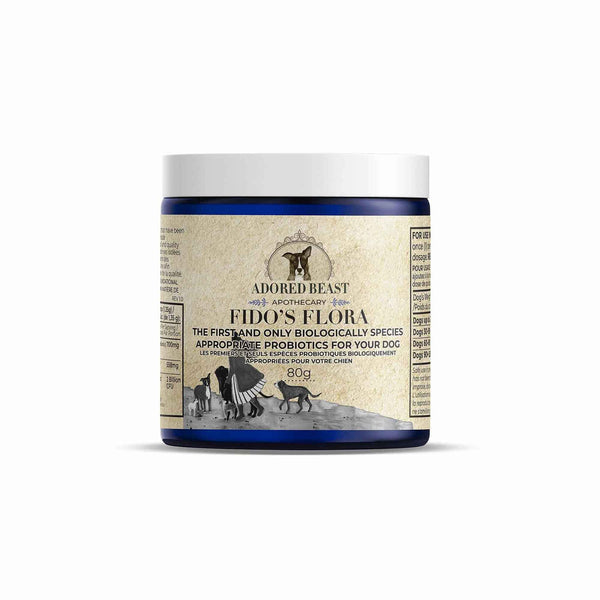
A species-specific canine probiotic like Fido's Flora is where most itchy dogs we work with start. For dogs with a longer history, the Leaky Gut Protocol works through the same logic over a longer arc. If you want the full picture of how the gut and the skin talk to each other, I went deep on it in our guide to dog gut health.
2. Change the food, and be specific about what you change it to
"Feed better food" is advice nobody can act on, so here is the actual destination: a complete and balanced, minimally processed diet. Raw, freeze-dried raw, or lightly cooked. The common thread is fresh whole ingredients that have not been through high-heat extrusion, and a formulation that meets full nutritional requirements rather than a bowl of nice ingredients.
That second half is not a technicality, and this is the part of the fresh-food conversation that gets skipped constantly.
Research published in the American Journal of Veterinary Research in November 2025 through the Dog Aging Project assessed 1,726 home-prepared diets. Only 6 percent had the potential to be nutritionally complete. Forty-four percent were classified as deficient outright. That echoes earlier work from UC Davis, where 95 percent of 200 published homemade recipes fell short on at least one essential nutrient and 83 percent had multiple gaps.
So the honest version is this: moving your dog off processed food is one of the highest-leverage things you can do, and doing it freehand from recipes online is how a skin problem turns into a calcium problem. Fresh, yes. Improvised, no. Use formulations that state complete and balanced on the label, or work with a veterinary nutritionist if you want to build meals yourself.
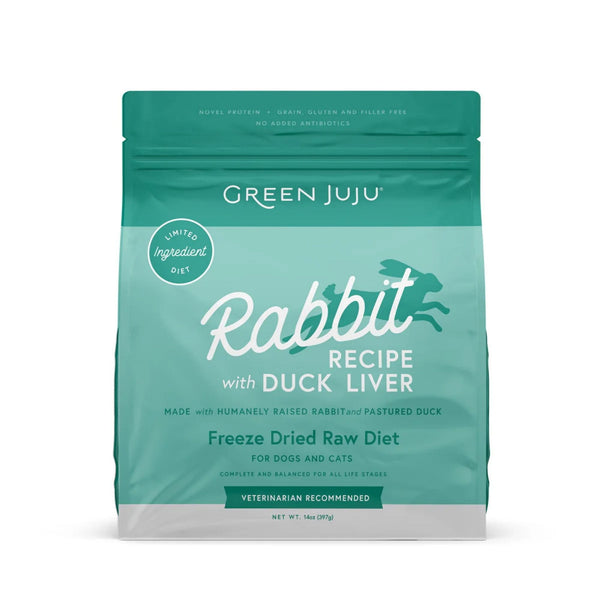
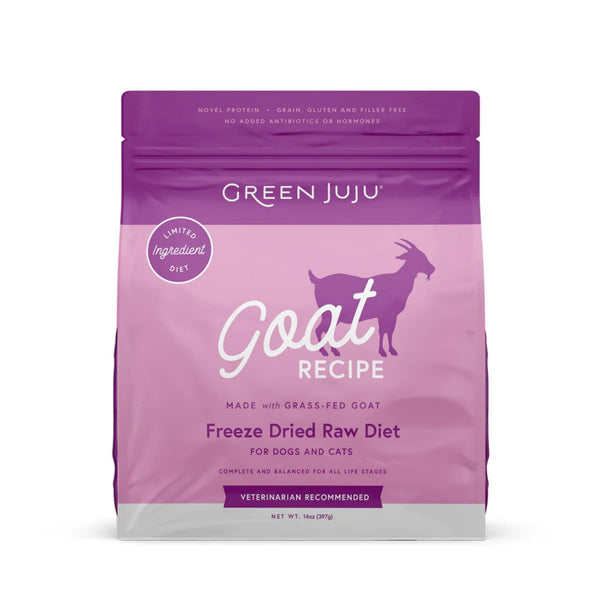
For a food trial specifically, you want a limited-ingredient diet built on a single protein your dog has not eaten before. Novel proteins like goat, rabbit, or bison are useful precisely because the immune system has no history with them. Our freeze-dried raw recipes are formulated as complete and balanced limited-ingredient diets for exactly this reason, and options like the Rabbit Recipe and Goat Recipe work well as a starting point.
Then run it properly. Weeks, not days, with nothing else going in: no biscuits, no flavored chews, no table scraps, no flavored medications if your vet agrees they can be swapped. One biscuit from a well-meaning visitor resets the clock. This is the least glamorous and most decisive thing on this page, and it fails far more often from being abandoned early than from being the wrong idea.
The 2023 AAHA allergic skin disease guidelines are also clear that mail-order blood and saliva allergy tests are not reliable tools for identifying food reactions, which sends a lot of pet parents down an expensive road that ends nowhere. The trial is the tool.
One practical note on raw, because I would rather say it than have you find out elsewhere: handle it like you would handle raw meat for yourself. Clean bowls, clean surfaces, wash your hands. That is the whole caveat, and it is manageable.
Changing Milka's food is what turned everything around for her. Her story was gut and skin together rather than allergies specifically, but the lesson held: the bowl was the lever.
3. Support the liver
This follows directly from the mechanism above. HNMT, the enzyme handling histamine inside the cells, is expressed primarily in the liver, so an organ under load is an organ doing that job less well.
I want to be precise about what this is and is not. The histamine pathway is well documented in human and general mammalian physiology. What does not exist is a canine trial showing that supporting the liver reduces itching in dogs. So this is mechanism plus our own experience, not trial evidence, and I would rather label it that way than dress it up. A herbal tincture like Liver Tonic is what we use, and if you want the fuller reasoning, including where the detox industry oversells itself, that is all in natural liver support for dogs.
4. Layer in omega-3s as support
Here is the honest inversion: omega-3 has the strongest trial data of anything in this section, and I still would not lead with it. It supports the skin barrier rather than addressing what is driving the reaction, which makes it a powerful addition to the three steps above and a weak substitute for them.
The evidence is genuinely good. A double-blinded, placebo-controlled trial published in the Journal of Small Animal Practice in 2004 supplemented 29 dogs for 10 weeks and found clinical scores improved in the omega-3 groups while the placebo group did not change. A later randomized, double-blind, placebo-controlled trial in BMC Veterinary Research fed 40 atopic dogs a diet enriched with omega-3s, antioxidants, and polyphenols, and measured a 25 percent reduction in lesion scores by day 30 and a 49 percent reduction by day 60. The control diet produced no measurable change.
Omega-3s are slow and they compound. A clean algae-based source like Potent-Sea delivers EPA and DHA without the oxidation problems fish oil is prone to.
5. Bathe, and keep bathing
Unglamorous, and it is in the actual veterinary guidelines. Regular bathing with a mild shampoo is part of the recommended approach to both flare-ups and long-term care, because it physically removes allergens from the coat and supports a barrier that is already compromised. A gentle option like the Calm Organic Lavender Shampoo, formulated with calendula and lavender for sensitive skin, does that work without stripping. If you want more on that ingredient specifically, here is what calendula actually does for dogs.
Where do I actually start with an itchy dog?
This is the sequence, and the order matters more than any single item on it.
The 5-Step Itch Audit
- Rule out fleas first, every single time. The 2023 AAHA allergic skin disease guidelines call for flea combing as part of the minimum workup before anything else. A single flea bite is enough to set off a sensitive dog, and a dog can be reacting without you ever seeing one. Consistent control matters year-round, and a botanical option like the Earth Animal Herbal Flea & Tick Spot On fits a lower-toxin routine.
- Ask your vet to check for infection. Skin cytology, ear cytology, and skin scrapings are the standard first look. Yeast and bacterial overgrowth ride along with allergic skin disease constantly, and no supplement fixes an itch that is being driven by an active infection.
- Give the diet a real trial, not a two-week one. Food-responsive itching is common and it is missed constantly because trials get abandoned early. Those same guidelines are clear that mail-order blood and saliva allergy tests are not reliable tools for identifying it.
- Work on the gut, and give it the longest runway. Skin flare-ups are often the visible end of something that started upstream, and the enzyme that clears ingested histamine is made in the gut wall. This is the slowest lever and the one we see hold.
- Support the barrier from both sides. Omega-3s in the bowl and regular gentle bathing on the outside, layered on top of the four steps above rather than standing in for them.
None of these is as satisfying as a pill you can give in thirty seconds. All of them do more.
Want this sequence written out, step by step?
The Dog Allergy & Yeast Relief Guide walks through the same order in far more detail: what to rule out first, how to run a food trial that actually reads, and how long to give each step before you judge it. It is free, and it lands in your inbox.
Form not loading? Grab the guide here.
Benadryl vs the root-cause sequence, side by side
This is the actual choice most pet parents are making at the medicine cabinet, so here it is laid out plainly. Neither column is a villain. They are built for different jobs, and the mismatch is where the frustration comes from.
| Benadryl (diphenhydramine) | The root-cause sequence | |
|---|---|---|
| What it targets | Blocks histamine at the receptor once the reaction is already underway | The drivers underneath the reaction: fleas, infection, food, the gut, the skin barrier |
| Evidence in dogs | A 2020 randomized crossover study found no significant reduction in allergic skin reactions, even at plasma levels effective in humans | Uneven and worth naming honestly. Omega-3 has the strongest trial data, probiotic trials are small and building, liver support is mechanism plus our experience rather than trial evidence |
| How much reaches the dog | Mean systemic availability measured at 7.8 percent after an oral dose | Not the relevant question. Food, bathing, and flea control act directly where the problem is |
| Speed | Fast in principle, but for chronic itch the 2015 ICADA guidelines find no conclusive evidence it resolves lesions at all | Slow. Weeks to months, and a food trial fails far more often from being abandoned early than from being the wrong idea |
| Long-term record in dogs | None exists. Never through FDA approval for animals, and no long-term canine safety package behind it | Food, bathing, and flea combing are ordinary care. Supplements still deserve a conversation with your vet |
| Where it genuinely fits | A narrow set of acute situations with veterinary guidance: an insect sting reaction, hives that appeared suddenly | The everyday chronic itch that sends most pet parents to the medicine cabinet in the first place |
The honest bottom line
Benadryl is not the villain some natural health articles make it out to be. It is a well-tolerated drug with a wide margin in dogs and a legitimate, narrow set of uses.
It is also, for the everyday itching that sends most pet parents to the medicine cabinet, a drug the veterinary evidence says will probably not help, given daily for years on a long-term safety record nobody has ever compiled. That is not a small thing. Every month spent waiting for a pill to work is a month the real driver goes unaddressed, and itchy dogs do not get less itchy while we wait.
If you have been giving your dog Benadryl and feeling like nothing is changing, you are not doing it wrong. You are using a tool that was never a strong fit for the job.
Your dog's body wants to be comfortable. Start with fleas, then infection, then food, then the gut, then the barrier. Go in that order, give it more time than feels reasonable, and work alongside your vet, ideally a holistic or integrative one.
You are not powerless here. You are your dog's biggest advocate.
Much love, Larry
Not sure where to start? Our Allergy Relief collection is built around this exact sequence.
Shop Allergy ReliefSources
- Banovic F, Denley T, Blubaugh A, Scheibe I, Lemo N, Papich MG. "Effect of diphenhydramine and cetirizine on immediate and late-phase cutaneous allergic reactions in healthy dogs: a randomized, double-blinded crossover study." Veterinary Dermatology, 2020;31(4):256-e58. pubmed.ncbi.nlm.nih.gov/31899570
- Ehling S, Bäumer W, et al. "Diphenhydramine pharmacokinetics after oral and intravenous administration of diphenhydramine and oral administration of dimenhydrinate to healthy dogs, and pharmacodynamic effect on histamine-induced wheal formation: a pilot study." Veterinary Dermatology, 2019. onlinelibrary.wiley.com
- Olivry T, DeBoer DJ, Favrot C, et al. "Treatment of canine atopic dermatitis: 2015 updated guidelines from the International Committee on Allergic Diseases of Animals (ICADA)." BMC Veterinary Research, 2015;11:210. ncbi.nlm.nih.gov/pmc/PMC4537558
- Hofmeister EH, Egger CM. "Evaluation of diphenhydramine as a sedative for dogs." Journal of the American Veterinary Medical Association, 2005;226:1092-1094. doi.org/10.2460/javma.2005.226.1092
- Wismer TA, Dorman DC. "Diphenhydramine exposure in dogs: 621 cases (2008-2013)." Journal of the American Veterinary Medical Association, 2016;249(1):77. avmajournals.avma.org
- Miller J, Simpson A, Bloom P, et al. "2023 AAHA Management of Allergic Skin Diseases in Dogs and Cats Guidelines." Journal of the American Animal Hospital Association, 2023;59(6):255-284. aaha.org
- MSPCA-Angell Clinical Reference. "Anaphylaxis in Dogs and Cats." mspca.org
- "Anaphylactic Shock: How to Effectively Diagnose and Treat." Today's Veterinary Practice, 2022. todaysveterinarypractice.com
- American Kennel Club. "Benadryl For Dogs: Uses, Side Effects, and Dosage Information." Updated 2026. akc.org
- Mueller RS, Fieseler KV, Fettman MJ, et al. "Effect of omega-3 fatty acids on canine atopic dermatitis." Journal of Small Animal Practice, 2004;45:293-297. pubmed.ncbi.nlm.nih.gov/15206474
- "Randomized, double-blind, placebo-controlled clinical trial measuring the effect of a dietetic food on dermatologic scoring and pruritus in dogs with atopic dermatitis." BMC Veterinary Research, 2021. ncbi.nlm.nih.gov/pmc/PMC8603501
- "Probiotics ameliorate atopic dermatitis by modulating the dysbiosis of the gut microbiota in dogs." BMC Microbiology, 2025. pmc.ncbi.nlm.nih.gov/PMC12012994
- Marsella R, Santoro D, Ahrens K. "Early exposure to probiotics in a canine model of atopic dermatitis has long-term clinical and immunological effects." Veterinary Immunology and Immunopathology, 2012;146:185-189, as reviewed in Frontiers in Cellular and Infection Microbiology, 2023. frontiersin.org
- Beynen AC. "Quercetin for dogs." Veterinary nutrition review, 2020. researchgate.net
- "Pharmacokinetics and Novel Metabolite Identification of Tartary Buckwheat Extracts in Beagle Dogs." Molecules, 2019. ncbi.nlm.nih.gov/pmc/PMC6836259
- Papich MG / BSAVA veterinary formulary data, diphenhydramine monograph: tolerance with chronic use, lowered seizure threshold, antimuscarinic effects, and absolute contraindications. vet-ebooks.com
- VCA Animal Hospitals. "Diphenhydramine." Off-label status in animals and interference with skin allergy testing. vcahospitals.com
- Wedgewood Pharmacy. "Diphenhydramine for Dogs and Cats." Overdose signs including seizures, respiratory depression, and death after massive overdose. wedgewood.com
- Maintz L, Novak N. "Histamine and histamine intolerance." American Journal of Clinical Nutrition, 2007. Diamine oxidase as the main enzyme for metabolism of ingested histamine. pubmed.ncbi.nlm.nih.gov/17490952
- "Diamine oxidase deficiency: implications for health, current management, and future directions in histamine intolerance." Review, 2025. HNMT as the intracellular pathway expressed primarily in the liver; DAO as the extracellular pathway in the intestine and kidneys. sciencedirect.com
- O'Brien J, Tolbert K, et al. Dog Aging Project analysis of 1,726 home-prepared canine diets. American Journal of Veterinary Research, November 2025. stories.tamu.edu
- Stockman J, Larsen JA, et al. Evaluation of 200 published homemade dog food recipes for nutritional adequacy. University of California, Davis. ucdavis.edu
- DailyMed (U.S. National Library of Medicine). BENADRYL Allergy Plus Congestion, diphenhydramine hydrochloride and phenylephrine hydrochloride tablet, Kenvue Brands LLC. Active ingredient listing. dailymed.nlm.nih.gov
- ASPCA Animal Poison Control Center / ASPCApro. "Allergy Medications that are Toxic for Pets." Guidance on checking both active and inactive ingredients, and xylitol risk in dogs. aspcapro.org
Disclaimer: This blog may contain affiliate links, and PAWDEGA may earn a small commission at no extra cost to you if you purchase through them. It may also link to products on our website, and this content is for educational purposes, not a replacement for veterinary advice.