Ashwagandha for dogs is an adaptogenic root, Withania somnifera, used to support how a dog's body responds to stress. It is also one of the very few herbs marketed for dogs that has actually been tested in dogs. Three randomized, double blind, placebo controlled canine trials have been published, and all three used the same protocol: 15 mg/kg of standardized root extract, once daily. In those trials, supplemented dogs showed lower stress hormone output, lower fear and anxiety scores, and no reported adverse events. It is generally well tolerated in otherwise healthy dogs. It is not right for every dog, and the group most often overlooked is dogs already taking thyroid, sedative, anti seizure, or immune suppressing medication.
Here is the single line worth holding onto: ashwagandha is one of the few adaptogens with placebo controlled canine research behind it, tested at 15 mg/kg of standardized root extract once daily, and the real question is not whether it works but whether it belongs alongside what your dog is already taking.
Let's be real for a second. Most of what you find when you search this ingredient is a supplement brand telling you it is safe and non toxic, followed by a buy button. Almost none of it mentions the canine studies by name. Almost none of it tells you which dogs should stay away from it.
So let's go through what the research actually says.
What is ashwagandha, and what does it do in a dog's body?
Ashwagandha is a root used in Ayurvedic medicine for centuries. It sits in a category called adaptogens, meaning it is associated with helping the body hold its balance under stress rather than sedating or stimulating it. Of all the adaptogens for dogs you will see on a label, this is the one with the most canine research attached to it.
Its active compounds are called withanolides. The mechanism researchers point to is the HPA axis, the hormonal loop connecting the brain and the adrenal glands that governs cortisol output. When that loop is running hot for a long time, the effects show up everywhere: digestion, sleep, coat, immune function, recovery.
That is the part that matters for dogs. A dog who is chronically braced, the one who paces during storms, who cannot settle when you leave, who has been reactive since the day you brought them home, is not carrying that only in their behavior. They are carrying it in their body too.
Ashwagandha is not a sedative. It does not knock a dog out, and it will not stop a thunderstorm from being frightening. What the research suggests it may do is soften the physiological response underneath the behavior.
Is ashwagandha safe for dogs?
In the published canine trials, yes, at the dose studied, over the periods studied. Across all three trials, no adverse events related to the supplement were reported.
Outside those trials, the honest answer needs more nuance. The NIH Office of Dietary Supplements notes that human studies raised no safety concerns for use of roughly up to three months, while longer term use has not been well characterized. The ashwagandha side effects in dogs and people most commonly reported are mild: stomach upset, loose stools, nausea, and drowsiness. That same fact sheet flags possible effects on the liver and on thyroid function.
Two practical rules follow from that.
Do not give your dog your own ashwagandha capsules. Human products are formulated at human doses and often carry other actives, sweeteners, or fillers that have no place in a dog's bowl. Use something made for dogs, and follow the label.
Introduce it slowly and watch the stool. Loose stool is the most common early sign that a dog is not tolerating a new herb, and it usually resolves when you back the amount down.
How much ashwagandha do dogs get in research?
This is where PAWDEGA can give you something no listicle does: the actual numbers, from the actual canine studies. When people search for ashwagandha dosage for dogs, this table is what they are looking for.
| Trial | Dogs studied | Daily dose used | Length | What changed |
|---|---|---|---|---|
| 2022, Journal of Veterinary Behavior | 24 dogs already showing signs of stress and anxiety | 15 mg/kg standardized root extract, once daily | 4 weeks | Statistically significant drop in urine cortisol to creatinine ratio, lower fear and anxiety scores on a validated behavioral questionnaire, lower pain scores |
| 2024, Veterinary Medicine and Science | Healthy dogs aged eight and older | 15 mg/kg standardized root extract, once daily | 60 days, with measurements at 30 and 60 days | Lower serum cortisol, higher red cell counts and hemoglobin, improved antioxidant markers, lower ALT and AST |
| 2025, Frontiers in Veterinary Science | Geriatric Beagles aged 12 to 15 | 15 mg/kg standardized root extract, once daily | Measurements at 30 and 60 days | Better fecal scores, higher short chain fatty acid production including propionic acid, lower ALT and AST |
| Adverse events related to the supplement across all three trials: none reported. Full citations are in the Sources list. | ||||
One number, three studies, two continents' worth of citation from a single research group: 15 mg/kg of standardized root extract, once daily.
Now here is what I want to be careful about, because this is exactly where pet content goes wrong. That figure is research context, not a home dosing instruction. It applies to a standardized extract with a known withanolide content, not to loose powder off a shelf or a blend where the ashwagandha amount is not printed on the label. If you cannot match the form, you cannot match the dose. Follow the label on the product you have, and talk to your vet, ideally a holistic or integrative vet, about your specific dog.
Does ashwagandha help dog anxiety?
The 2022 trial is the most direct evidence we have. Twenty four dogs already showing signs of stress and anxiety received either a placebo or 15 mg/kg of root extract daily for four weeks. The supplemented dogs showed a statistically significant reduction in urine cortisol to creatinine ratio, which is a measurable stress hormone output, alongside lower scores in the fear and anxiety domain of a validated behavioral questionnaire. Pain scores dropped too, which is interesting on its own, since chronic discomfort and anxious behavior are so often tangled together in dogs.
That is meaningful. It is also 24 dogs over four weeks.
Here is what most pet parents are never told clearly: an adaptogen supports the stress response, it does not resolve the reason the stress response is firing. A dog with separation distress still needs the desensitization work. A dog who is reactive on leash still needs the training plan. A dog whose anxiety appeared suddenly in middle age needs a vet visit, because pain and thyroid changes both show up as behavior changes long before anything else looks wrong.
Ashwagandha may make that work land more easily. It does not replace it.
Is ashwagandha good for senior dogs?
Two of the three canine trials were run in older dogs, which makes this one of the better researched adaptogens for the senior stage specifically.
In the 2024 trial, healthy dogs aged eight and older showed lower serum cortisol after 60 days, alongside higher red cell counts and hemoglobin and improved antioxidant markers. In the 2025 trial, geriatric Beagles aged 12 to 15 showed better fecal scores and higher short chain fatty acid production, including propionic acid, which is associated with a stronger gut barrier. If you have read our guide to dog gut health and whole-body wellness, you will recognize why that finding caught my attention.
Both trials also reported lower ALT and AST, the two liver enzymes most pet parents learn about the hard way.
Which brings me to a caveat I care about personally.
When Milka's ALT came back elevated at eight years old with no outward symptoms at all, our instinct was to do more. More liver support. More detox. More of everything. A few weeks later we retested, expecting progress... and her values were higher. What finally brought them down was backing off to one thing. I wrote about that whole experience in our honest breakdown of natural liver support for dogs, and the lesson applies here too. A study showing an herb is associated with better liver markers is not a reason to add it to a dog whose liver is already being watched. That is a conversation for your vet and your dog's bloodwork history, not for the internet.
Which dogs should skip ashwagandha?
This is the section that is missing from nearly every article ranking for this ingredient, and it is the most important one.
The NIH's National Center for Complementary and Integrative Health lists documented interactions between ashwagandha and several drug classes. Read that list with a dog in mind and it stops being abstract:
- Thyroid hormone medication. Levothyroxine is one of the most commonly prescribed drugs in veterinary medicine, and hypothyroidism is one of the most common canine endocrine conditions. In the only human trial on thyroid function, ashwagandha raised T3 and T4 and lowered TSH. There is no canine data on this, so that is an extrapolation, and it is exactly the kind of extrapolation worth taking seriously rather than ignoring. If your dog is on thyroid medication or being monitored for thyroid values, this is a vet conversation before anything else.
- Sedatives and behavioral medication. Trazodone, gabapentin, and similar medications share overlapping territory. Stacking a calming herb on top can produce more drowsiness than anyone intended.
- Anti seizure medication. Phenobarbital and related drugs appear on the interaction list. For epileptic dogs, nothing new goes in the bowl without the neurologist or vet knowing.
- Immune suppressing medication. Prednisone, cyclosporine, and similar drugs work by dampening immune activity. Ashwagandha is described in the literature as immunomodulatory, meaning it may pull in the other direction.
- Diabetes and blood pressure medication. Both classes are on the NIH list, and both are dose sensitive in dogs.
- Pregnant or nursing dogs. There is no safety data here worth relying on. Skip it.
None of this makes ashwagandha dangerous. It makes it an active ingredient, which is the whole point of using it. Active ingredients interact. Herbs are not a category exempt from that.
How long does ashwagandha take to work in dogs?
The canine trials measured outcomes at four weeks, 30 days, and 60 days. The 2022 anxiety trial ran for four weeks total, and the two senior dog trials found changes at both the 30 and 60 day marks.
So the honest expectation is weeks, not days. This is not a situational calming aid you give an hour before fireworks. Adaptogens are cumulative, which also means they are worth giving a fair trial before you decide they did nothing. Four to eight weeks of consistent daily use is a reasonable window to judge by, ideally while you keep short notes on the behaviors that actually bother you, so you are comparing observations rather than impressions.
Where does ashwagandha usually show up in dog supplements?
Rarely on its own. Most calming supplements for dogs that contain ashwagandha use it as one ingredient inside a broader formula, frequently paired with functional mushrooms, since mushrooms like reishi occupy similar territory. Our MycoDog mushroom blends are an example: ashwagandha sits alongside the mushroom extracts in each blend. Worth knowing, though, and this is true of blends generally rather than any one brand: proprietary formulas do not disclose how much ashwagandha is in a serving, so a blend cannot be compared against the 15 mg/kg figure from the trials. That is fine when you want broad daily support. It is not the same thing as dosing a standardized extract, and any honest brand should tell you so.
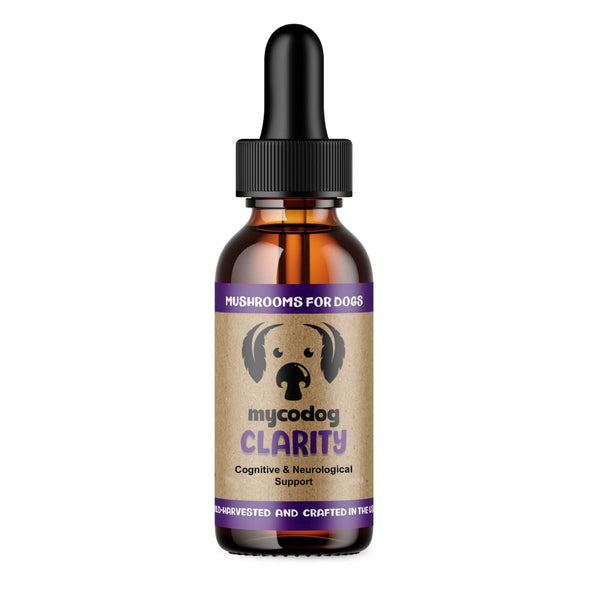
Blend or single extract: which one fits your dog?
This is the choice the section above sets up, and it is worth making on purpose rather than by accident. A blend gives you several supportive ingredients in one bottle. A single extract gives you one ingredient and a clear read on what it did. Neither is the better answer in general. One of them is the better answer for your dog.
| What you are weighing | Multi ingredient blend CLARITY |
Single ingredient extract Reishi |
|---|---|---|
| What is in the bottle | Lion's Mane, Reishi and Cordyceps, with Bacopa Monnieri and ashwagandha | Reishi, and nothing else |
| Contains ashwagandha | Yes, amount per serving not disclosed | No |
| Comparable to the 15 mg/kg research dose | No | Not applicable, different ingredient |
| Choose it when you want | Broad daily support across cognition, nervous system and healthy aging in one bottle | To add one thing at a time and actually see what it does |
| If something does not agree with your dog | Harder to tell which ingredient was responsible | Easy to isolate, because there is only one variable |
| Vet conversation first if your dog is on medication | Yes | Yes |
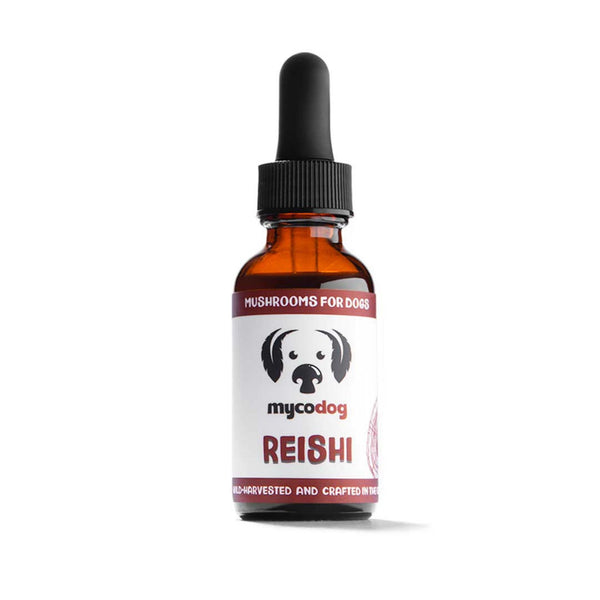
If you are specifically interested in the mushroom side of that equation, our guide to chaga mushroom for dogs walks through how to read extract quality on a label, which is the same skill you need here.
The honest limitation
All three canine trials came from the same research group in India, all used a single branded standardized extract, and the largest enrolled 24 dogs. That is a narrow evidence base.
It is also more than most herbs on the shelf can claim. Randomized, double blind, placebo controlled, in the actual species, replicated three times with consistent results and a consistent dose. Very few ingredients in the pet supplement aisle have that. The right conclusion is not skepticism, and it is not certainty either. It is that ashwagandha has earned a real place in the conversation, with the caution list above attached to it.
The bottom line on ashwagandha for dogs
You are not looking for a miracle ingredient. You are looking for something with evidence behind it that fits the dog in front of you.
Ashwagandha has the evidence. It has a known dose in dogs, a consistent safety record over two months of daily use in trials, and measurable effects on stress hormones, behavior scores, and gut markers. It also has a real interaction list, and if your dog is on medication for their thyroid, their behavior, their seizures, or their immune system, that list matters more than any benefit.
Start with the question, not the product. What is the stress actually coming from? What else is your dog taking? What does their bloodwork history look like? Answer those first, and whether ashwagandha belongs in the plan usually answers itself.
You know your dog better than any label does.
Much Love, Larry
Sources
- Efficacy and safety of standardized Ashwagandha (Withania somnifera) root extract on reducing stress and anxiety in domestic dogs: A randomized controlled trial. Kaur J, Seshadri S, Golla KH, Sampara P. Journal of Veterinary Behavior, 2022, vol 51, pp 8 to 15. https://www.sciencedirect.com/science/article/abs/pii/S1558787822000326
- Effects of ashwagandha (Withania somnifera) root extract on aging-related changes in healthy geriatric dogs: A randomized, double-blinded placebo-controlled study. Bharani KK, Devarasetti AK, Carey L, et al. Veterinary Medicine and Science, 2024, 10(5):e1556. https://onlinelibrary.wiley.com/doi/full/10.1002/vms3.1556
- The role of Ashwagandha in modulating gut parameters in dogs: a randomized double-blind placebo-controlled trial. Bharani KK, Devarasetti AK, Bobbili R, et al. Frontiers in Veterinary Science, 2025, 11:1491989. https://pmc.ncbi.nlm.nih.gov/articles/PMC11794502/
- Ashwagandha: Usefulness and Safety. National Center for Complementary and Integrative Health, National Institutes of Health. https://www.nccih.nih.gov/health/ashwagandha
- Ashwagandha fact sheet for consumers. NIH Office of Dietary Supplements, updated December 2023. https://ods.od.nih.gov/factsheets/ashwagandha-Consumer
- Efficacy and Safety of Ashwagandha Root Extract in Subclinical Hypothyroid Patients: A Double-Blind, Randomized Placebo-Controlled Trial. Sharma AK, Basu I, Singh S. Journal of Alternative and Complementary Medicine, 2018, 24(3):243 to 248. https://journals.sagepub.com/doi/10.1089/acm.2017.0183